Role of Ultrafiltration Membranes in Industrial Water Reuse and Discharge Compliance
Industrial water discharge limits continue to tighten across manufacturing, chemical processing, and food production sectors. Facilities face pressure to reduce freshwater intake while meeting strict effluent standards. Ultrafiltration membranes play a central role in enabling industrial systems to reuse water and maintain compliance with discharge requirements without disrupting production.
For operations that rely on industrial pumps, working with the right water treatment equipment supplier is essential. This helps maintain filtration performance, which directly affects uptime, energy consumption, and consistent regulatory compliance. Understanding how ultrafiltration membranes function within tertiary systems helps decision-makers design systems that balance compliance, reliability, and cost control.
People Also Ask
What is the purpose of ultrafiltration in wastewater treatment?
Ultrafiltration removes suspended solids, bacteria, and fine particles from treated wastewater. It serves as a physical barrier in tertiary treatment, helping facilities meet discharge limits and prepare water for reuse.
How does ultrafiltration support industrial water reuse?
Ultrafiltration produces low-turbidity, low-solids effluent. This improves reliability in cooling systems, process wash systems, and as pre-treatment for reverse osmosis, reducing fouling and protecting equipment.
What Is Tertiary Water Treatment?
Tertiary water treatment is the advanced stage of wastewater processing. It follows primary and secondary treatment.
- Primary treatment removes large solids.
- Secondary treatment reduces biological contaminants.
- Tertiary treatment polishes the water before discharge or reuse.
This final stage targets:
- Suspended solids
- Fine particulates
- Residual organic matter
- Pathogens
- Nutrients that exceed discharge limits
Tertiary systems often determine whether a facility meets environmental regulations. They also influence whether treated water can be reused for cooling, washdown, or process applications.
These membranes are widely used at this stage because they provide consistent physical separation without relying heavily on chemical additives.
How Ultrafiltration Works in Tertiary Systems
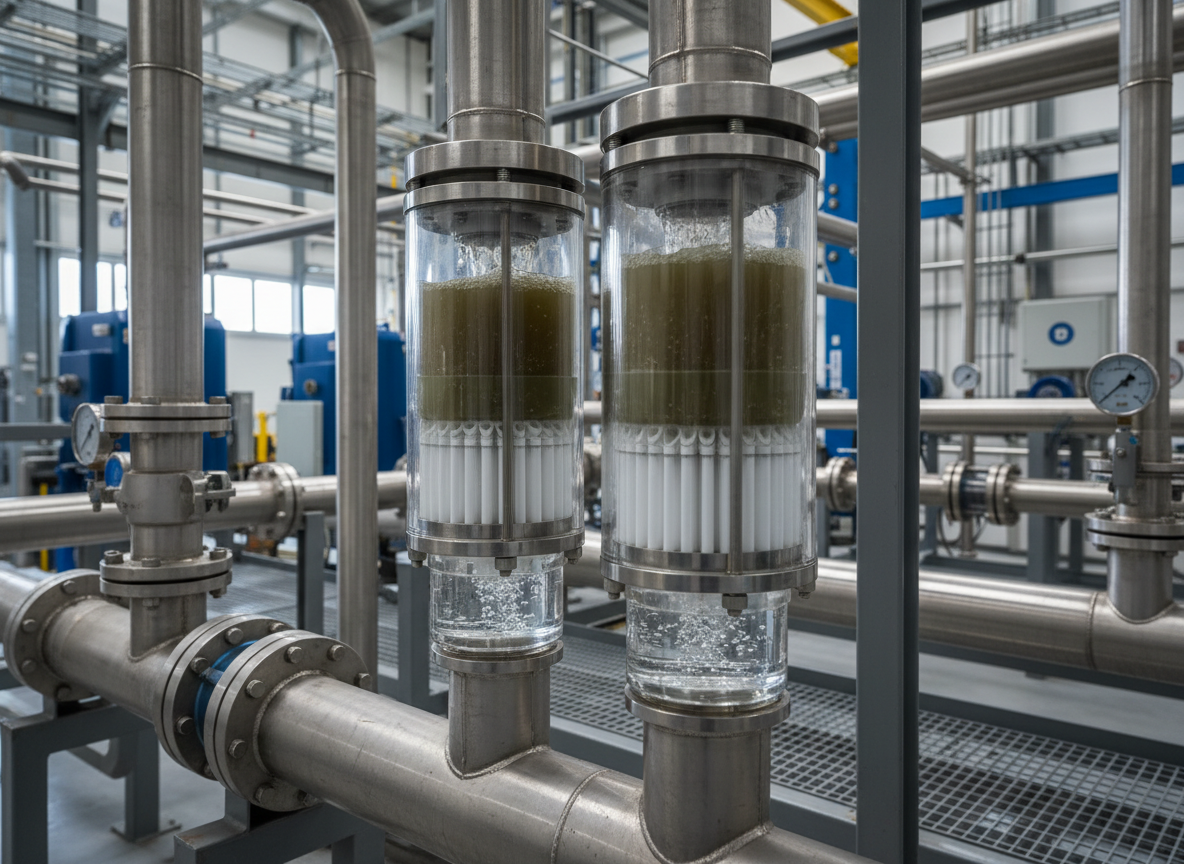
Ultrafiltration is a membrane filtration process. It uses pressure to force water through semi-permeable membranes.
These membranes contain microscopic pores. The pore size typically ranges in microns. Water passes through. Suspended solids, bacteria, and high-molecular-weight compounds remain behind.
Key operating principles include:
- Crossflow or dead-end filtration
- Controlled transmembrane pressure
- Periodic backwashing or cleaning cycles
Industrial water pumps play a critical role in maintaining steady feed pressure. Stable flow rates ensure uniform membrane performance and prevent uneven fouling.
Unlike conventional media filters, ultrafiltration membranes act as a physical barrier. Performance does not depend solely on settling or gravity. This mechanical separation improves consistency, especially when influent quality fluctuates.
Why Ultrafiltration Improves Compliance and Reliability
Industrial facilities often experience changing flow rates and contaminant loads. Seasonal production changes or upstream process shifts can impact wastewater composition.
Membrane systems improve compliance by:
- Providing predictable turbidity reduction
- Removing pathogens and fine solids
- Supporting downstream reverse osmosis systems
- Stabilizing discharge parameters
Effluent clarity remains consistent even when influent quality varies. This stability reduces the risk of regulatory exceedances.
For facilities that reuse treated water, membrane systems also:
- Protect cooling towers from scaling
- Reduce solids accumulation in process loops
- Improve overall system efficiency
Reliable filtration lowers strain on downstream equipment. Pumps, valves, and instrumentation benefit from reduced particulate exposure. This contributes to longer service intervals and fewer maintenance disruptions.
Integration Considerations for Industrial Facilities
Ultrafiltration does not operate in isolation. Proper integration with existing treatment and pumping infrastructure is essential.
Important design factors include:
- Feed pump selection and pressure control
- Pre-filtration to reduce heavy solids loading
- Chemical compatibility with membrane materials
- Automated monitoring of pressure and flow
Industrial pumps must deliver steady, controlled pressure. Oversized pumps can increase energy consumption and accelerate membrane wear. Undersized pumps may reduce throughput.
Instrumentation such as flow meters and pressure sensors from water treatment equipment suppliers supports accurate performance monitoring. Real-time data enables operators to identify fouling trends before compliance issues arise.
Space constraints also influence system selection. Modular membrane skids often fit into existing treatment layouts with minimal disruption.
Operational Challenges and How to Address Them
While ultrafiltration provides strong performance, it requires proper management.
Common challenges include:
- Membrane fouling from organics or biofilm
- Scaling due to high mineral content
- Energy consumption from sustained pressure
These challenges can be addressed through:
- Routine backwashing cycles
- Scheduled chemical cleaning protocols
- Pretreatment to remove heavy solids
- Optimized pump sizing for energy efficiency
Balanced system design reduces stress on membranes. Stable pressure and controlled flow rates help extend membrane life.
Monitoring transmembrane pressure trends provides early warning of fouling. Addressing issues early prevents sudden performance drops.
Facilities that integrate membrane systems with well-matched industrial pumps often see lower overall operating costs. Energy efficiency improves when pumping systems operate near optimal duty points.
When Ultrafiltration Makes the Most Sense
Ultrafiltration membranes deliver the greatest value in situations such as:
- Facilities facing strict discharge limits
- Plants aiming to reduce freshwater intake
- Operations planning water reuse initiatives
- Systems requiring consistent effluent turbidity
Industries that commonly benefit include:
- Chemical processing
- Food and beverage manufacturing
- Power generation
- Heavy industrial production
Where discharge penalties are high, the cost of non-compliance often exceeds the cost of investing in advanced filtration.
Ultrafiltration also supports long-term sustainability goals. Water reuse reduces dependence on municipal supply and strengthens operational resilience.
Also Read:
Single-Stage vs Multi-Stage Centrifugal Water Pumps
Designing Robust Water Pressure Systems for Industrial Plants
How Industrial Pressure Drift Reduces Production Yield and Why Booster Pump Systems Matter
Supporting Reliable Water Management in Industrial Systems
Ultrafiltration membranes have become a critical component of tertiary water treatment. They provide predictable separation, stable effluent quality, and improved protection for downstream equipment. When integrated with properly selected pumping systems and monitoring controls, membrane filtration enhances compliance and operational reliability.
Facilities evaluating upgrades to water treatment infrastructure can contact Vissers Sales Corp. for heavy-duty industrial water pump solutions. These solutions help support consistent flow control in advanced filtration systems. Reviewing system requirements with experienced technical teams can help align pump selection with membrane performance objectives.