
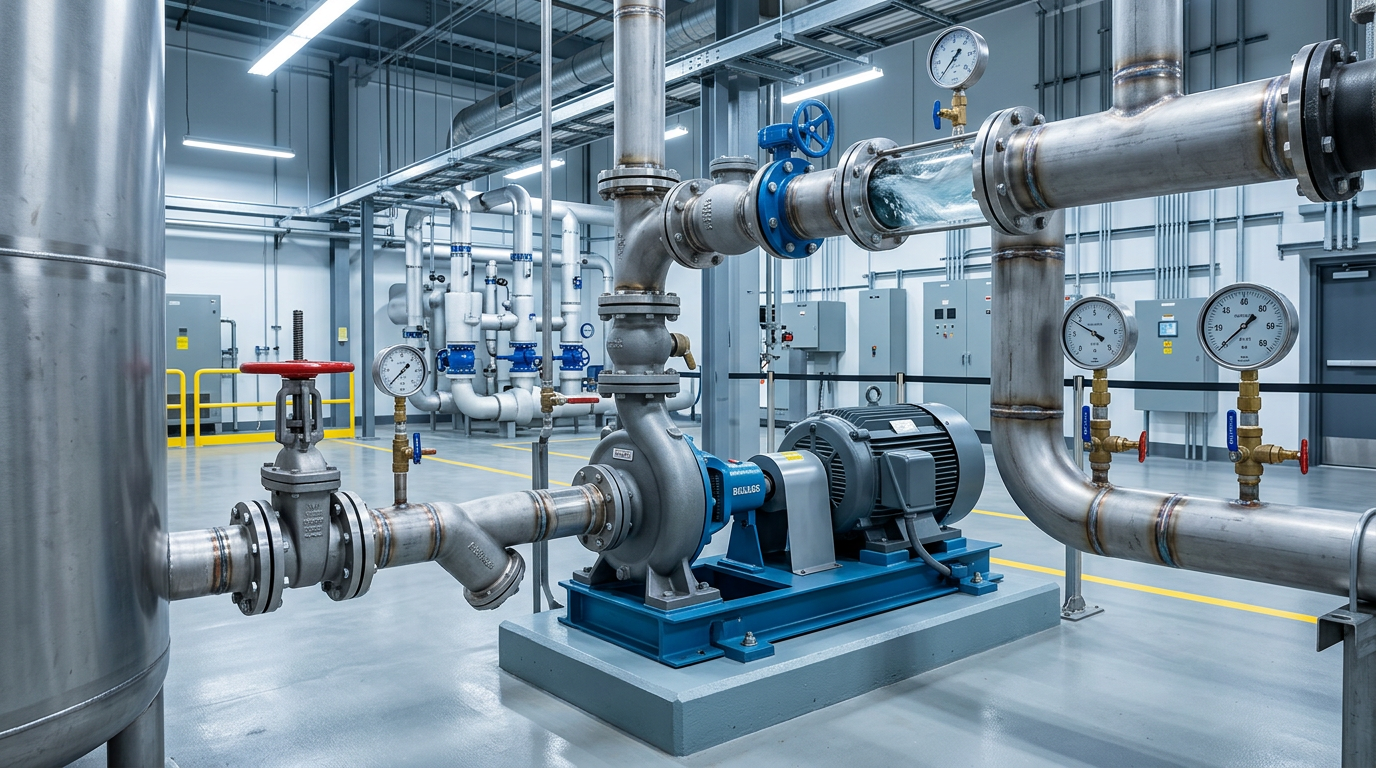
How Self-Priming Pumps Compare to Centrifugal Pumps in Industrial Applications
Stable fluid movement supports consistent industrial performance. Pressure loss, air entrainment, or poor suction conditions can disrupt operations and increase maintenance demands. Selecting between self-priming pumps and centrifugal water pumps directly affects system reliability, efficiency, and lifecycle costs.
Both pump types serve essential roles in industrial systems. However, their operating principles and suitability for application differ in important ways.
Understanding How Centrifugal Water Pumps Operate
Centrifugal water pumps rely on rotational energy to move fluid. An impeller spins inside a casing, creating velocity. This velocity converts into pressure as fluid exits the pump.
Key characteristics include:
- Continuous, steady flow under stable suction conditions
- High efficiency in closed-loop or flooded suction systems
- Simple mechanical design with fewer moving parts
- Strong performance in high-flow, low-to-moderate head applications
These pumps perform best when the system remains fully primed and free from air intrusion.
What Makes a Pump Self-Priming?
A self-priming pump builds on centrifugal design principles but includes features that allow it to evacuate air from the suction line.
Instead of requiring manual priming, the pump:
- Retains liquid within the casing after initial use
- Uses this retained liquid to create a vacuum
- Draws fluid into the pump even when air is present in the suction line
This capability allows operation in systems where suction conditions are not consistently stable.
The Key Differences Between Self-Priming and Standard Centrifugal Pumps
While both pump types share similar fundamentals, their differences affect installation and operation.
Priming Capability
- Centrifugal water pumps require external priming or flooded suction
- Self-priming pumps remove air automatically after initial setup
Handling Air Entrainment
- Centrifugal pumps lose efficiency when air enters the system
- Self-priming pumps tolerate intermittent air without immediate failure
Installation Flexibility
- Centrifugal pumps often need placement below the fluid level
- Self-priming pumps can operate above the liquid source
Efficiency Considerations
- Centrifugal pumps typically offer higher efficiency in ideal conditions
- Self-priming pumps may sacrifice some efficiency for operational flexibility
Industrial Situations Where Centrifugal Pumps Are Preferred
Centrifugal pumps in Canada remain a strong choice in controlled environments where suction conditions remain reliable.
Common applications include:
- Process water circulation systems
- Cooling towers and heat exchangers
- Closed-loop transfer systems
- High-flow distribution networks
These systems benefit from:
- Predictable flow rates
- Lower energy consumption under steady operation
- Reduced mechanical complexity
When suction conditions remain stable, centrifugal pumps provide efficient and consistent results.
When Self-Priming Pumps Become the Better Option
Self-priming pumps offer advantages in systems where air exposure or intermittent flow occurs.
Typical use cases include:
- Transfer from tanks or pits located below the pump level
- Applications with fluctuating liquid levels
- Systems requiring frequent start-stop cycles
- Situations where manual priming is impractical
These pumps reduce downtime by continuing to operate even when air enters the suction line.
Key Engineering Factors to Evaluate Before Selecting a Pump
Selecting between self-priming and centrifugal pumps requires careful evaluation of system conditions.
Important factors include:
- Suction Lift and Piping Configuration: Determines whether air handling is required
- Flow Rate and Pressure Requirements: Defines pump sizing and performance expectations
- Fluid Characteristics: Includes viscosity, temperature, and presence of solids
- Operating Cycle: Continuous vs intermittent operation affects pump choice
- Energy Efficiency Goals: Impacts long-term operating costs
Each factor influences whether efficiency or flexibility becomes the priority.
Also Read:
Common Reasons for Pressure Drop in a Centrifugal Pump
Centrifugal Pumps in Canada: The Key Players in Industrial Settings
The Impact of Variable Frequency Drives (VFDs) on Centrifugal Pump Performance and Lifecycle
Why Proper Pump Selection Improves Long-Term System Performance
Pump selection depends on suction conditions, system design, and operational priorities. Systems with stable flow benefit from centrifugal efficiency, while variable conditions often require self-priming flexibility.
Incorrect pump selection often leads to:
- Frequent loss of prime
- Increased maintenance cycles
- Energy inefficiencies
- Inconsistent flow and pressure
Aligning pump design with system conditions supports:
- Stable performance across operating cycles
- Reduced downtime and intervention
- Improved equipment lifespan
- Lower total cost of ownership
Centrifugal water pumps and self-priming pumps both deliver value when applied correctly. The key lies in matching pump capabilities with system demands.
Reviewing available options from centrifugal pump suppliers is important for applications that require reliable fluid flow. Contact Vissers Sales Corp today to support informed decision-making for pump selection.