
The Case for Boring Pump Rooms
There is a strange truth in industrial operations: the best pump rooms are usually the least interesting. They are not dramatic. They are not full of improvisation. They do not require constant heroics from operations or maintenance. They are calm, readable, serviceable, and predictable. In other words, they are boring. And that is exactly what makes them valuable.
Too often, interesting pump rooms get mistaken for busy, important, or complex environments. There is always a workaround in place. There is always a valve someone knows not to touch. There is always a noise that “has been like that for a while”. There is always one operator who knows the sequence that makes the system behave. All of that is a sign that the room has become dependent on memory, habit, and tolerance for friction.
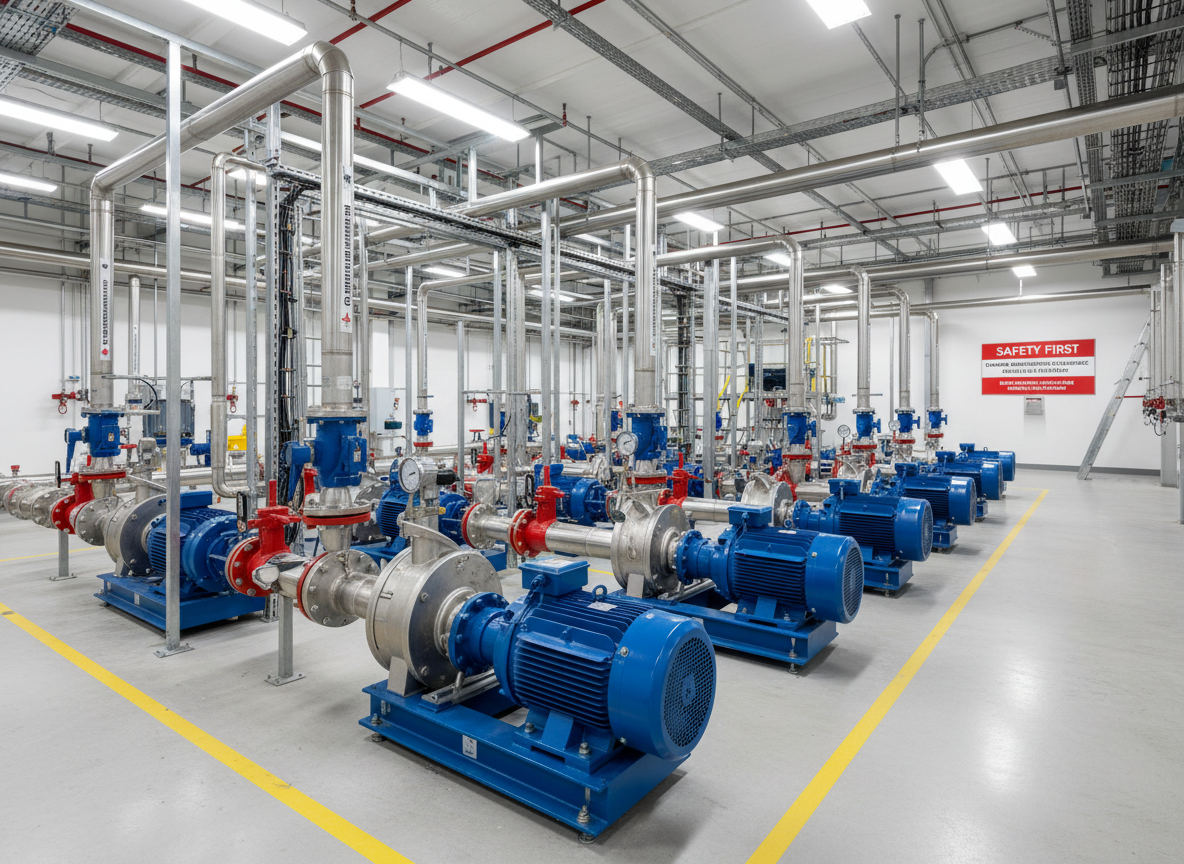
A boring pump room is different. It is designed so that normal work feels normal. Gauges are easy to read. Valves are where people expect them to be. Relief return lines go somewhere sensible. Containment is obvious. Labels are clear. The system does not require special knowledge just to survive the day. You can walk into it, understand it, and trust it.
That kind of environment is built through a long series of practical choices. One of those choices is serviceability. In a boring pump room, routine maintenance is not a gymnastics event. People can isolate a pump, remove a strainer, check a seal, or verify a reading without dismantling half the skid or leaning into a hazard zone. That design choice pays back every time someone touches the system. It reduces downtime, lowers frustration, and makes good maintenance more likely because the work is easier to do properly. (Also read: What “good system design” looks like in a pump room)
A boring pump room also has fewer surprises. Systems start and stop the way people expect. Alarm lists are short enough to mean something. If a pump sounds different, it is noticed early because the room is usually quiet and stable. If pressure drifts, someone catches it because the gauges are visible and the log is simple enough to maintain. Stability makes weak signals easier to see. (Further reading: No more 2 a.m. call-outs: make your pump system reliable)
The cultural side matters too. Boring pump rooms are usually supported by boring habits, and boring habits are underrated. Logs get filled out. Strainers get cleaned on schedule or by differential pressure trend. Spares are stocked before they are needed. Temporary fixes are tracked and removed instead of becoming part of the architecture. None of this looks heroic in a meeting, but it is how stable plants stay stable.
By contrast, dramatic pump rooms are often expensive. They encourage workarounds. They normalize noise. They hide inefficiency inside routines that people stop questioning. A throttled valve stays throttled for years. A temporary bypass becomes “just how we run it”. An alarm gets ignored because it chirps too often. A replacement part is always on order. Over time, the room remains functional, but it stops being reliable.
The case for boring pump rooms is really a case for maturity. A mature pump room does not need constant interpretation. It does not depend on institutional folklore. It supports the people who use it instead of demanding extra effort from them. That kind of room reduces stress because the system behaves consistently. It improves safety because people can see and reach what they need. It improves reliability because there are fewer hidden compromises waiting to surface.
In the end, the most impressive pump rooms are the ones that let people do good work without unnecessary friction. They are the ones no one talks about very much because they simply keep doing their job.
We at Vissers Sales Corp specialize in optimizing pump systems to ensure maximum reliability and minimum operating cost. Reach out to us toll-free in Canada at 1-800-367-4180 to get the conversation started.