What Ontario Chemical Processors Require from Water Treatment Equipment Suppliers for Custom Liquid Handling
Selecting the wrong supplier for a chemical processing facility creates operational risk and compliance exposure. It can lead to downtime, material loss, and safety concerns. This is where selecting the right water treatment equipment suppliers becomes critical.
Facilities operating under Ontario regulations require suppliers with expertise in continuous liquid-feed processes and system integration. Proper alignment between equipment and process conditions ensures stable operation and predictable performance.
Shifting from Quantity-Based Dosing to Performance-Based Control
Industrial facilities have moved away from manual batch dosing toward automated control systems. Microprocessor-based controls and real-time monitoring now regulate chemical feed rates in response to live process conditions.
This shift reduces chemical waste and limits operator exposure. Automated systems also improve dosing accuracy and support regulatory compliance across chemical processing environments.
People Also Ask
What is industrial water treatment?
Industrial water treatment is the use of physical, chemical, and sometimes biological processes to condition raw water or wastewater. Hence, it’s suitable for specific industrial uses (e.g., process water, boiler feed, cooling water) or safe discharge. It focuses on controlling issues like scaling, corrosion, fouling, and microbiological growth that can damage equipment and disrupt operations.
What is a chemical feed system?
A chemical feed system (chemical dosing system) is equipment that stores and accurately injects treatment chemicals into a water or process stream at a controlled rate. Typical components include a chemical tank, metering pump, piping/valves, and controls/instrumentation to manage dosing safely and consistently.
The Importance of Integrated Systems Over Isolated Components
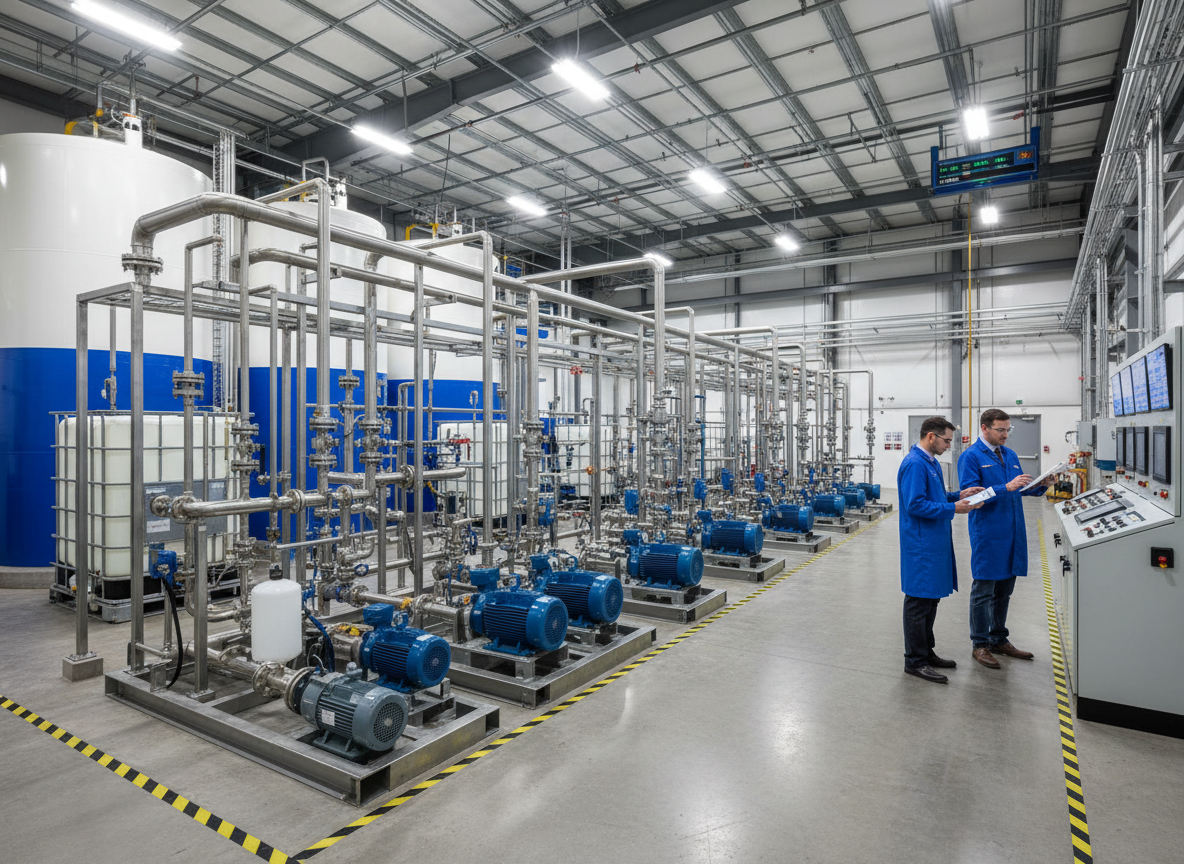
Standalone components often create inefficiencies and performance gaps. Integrated systems that combine storage tanks, metering pumps, and instrumentation provide better control and reliability.
A unified configuration reduces fouling, limits overfeeding, and improves energy efficiency. Many facilities improve performance by upgrading process zones with engineered systems instead of replacing individual components.
Why Off-the-Shelf Equipment Fails in Chemical Processing
Standard equipment does not always account for chemical-specific requirements. Variations in fluid properties and operating conditions can lead to premature failure.
Common issues include:
- Seal degradation from incompatible materials
- Scaling and buildup in piping systems
- Phase separation in chemical mixtures
Custom configurations aligned with process conditions deliver better reliability and compliance.
Managing Chemical Compatibility and Corrosivity Risks
Material selection plays a critical role in system performance. Incorrect wetted materials can lead to corrosion, leakage, and system failure.
Key evaluation factors include:
- Fluid viscosity and density
- Corrosivity classification
- Vapour pressure characteristics
Custom system design ensures compatibility with aggressive chemical environments and supports long-term operational stability.
Controlling Flow Requirements and Pressure Conditions
Accurate flow and pressure control are essential in continuous liquid feed systems. Small deviations can impact product quality and process consistency.
Critical parameters include:
- Maximum flow rate requirements
- Injection point pressure
- Temperature range
- Net Positive Suction Head (NPSH) conditions
Evaluating suction conditions prevents cavitation and protects pump components from premature wear.
How to Evaluate Water Treatment Equipment Suppliers for Custom Liquid Handling
Evaluating water treatment equipment suppliers requires a focus on engineering capability, system design expertise, and lifecycle support. Equipment selection should reflect real operating conditions rather than catalogue specifications.
Assessing Engineering Capabilities for Packaged Systems
Skid-mounted systems that are designed and tested off-site reduce installation risks and commissioning delays. These systems allow controlled integration into existing infrastructure.
Effective system design includes:
- Secondary containment
- Pressure relief devices
- Integrated control systems
A structured flow analysis supports proper system configuration for industrial pump systems.
Verifying Manufacturer Partnerships and Certifications
Supplier partnerships with established equipment manufacturers indicate access to tested components. Certification through recognized North American standards ensures compliance with industrial requirements.
Traceability and documentation should be readily available to support procurement decisions and regulatory inspections.
Evaluating Post-Installation Support
Lifecycle support affects long-term system performance and cost. Reliable suppliers maintain:
- Spare parts availability
- Maintenance and calibration services
- Clear service timelines
Ongoing support reduces unplanned downtime and maintains system reliability.
Steps to Integrating a Heavy-Duty Industrial Water Pump and Metering System
Integrating a heavy-duty industrial water pump and metering system requires structured planning. Skipping early-stage evaluation often leads to performance issues after installation.
Conducting Flow and Suction Analysis
System design begins with mapping operating conditions and infrastructure constraints. This includes:
- Piping layout and system configuration
- Redundancy requirements
- Flow variation and turndown ratios
Selecting between intermittent and continuous feed processes determines the appropriate pump type.
Implementing Monitoring and Control Systems
Connecting equipment to centralized monitoring systems improves visibility and control. Parameters such as flow rate, pH, conductivity, and tank levels provide actionable insights.
Continuous monitoring supports:
- Process optimization
- Predictive maintenance
- Reduced manual intervention
Improving System Performance Through Engineered Solutions
Performance differences between engineered systems and standard installations become apparent under demanding operating conditions.
Engineered systems provide:
- Consistent flow control
- Reduced energy consumption
- Improved operational stability
Customized configurations outperform generic setups by aligning with process-specific requirements.
Supporting Compliance Through System Design
System design plays a critical role in meeting regulatory requirements. Safety features integrated at the design stage reduce operational risks.
These include:
- Isolation valves
- Pressure relief systems
- Automated shutdown controls
Well-designed systems help reduce compliance failures and support safe chemical handling operations.
Also Read:
Designing Robust Water Pressure Systems for Industrial Plants
What Sets Reliable Water Treatment Equipment Suppliers in Canada Apart
Next Steps for Industrial Liquid Handling Systems
Strengthening System Reliability
Selecting the right supplier depends on three factors:
- Verified certifications
- Established manufacturer partnerships
- Engineering capability for custom systems
These factors influence system performance, asset lifespan, and maintenance requirements.
Planning System Evaluation and Upgrades
System evaluation includes reviewing existing chemical feed processes and identifying areas for improvement. Upgrades should focus on performance, efficiency, and alignment with compliance requirements.
Contact Vissers Sales Corp. to leverage careful planning to ensure industrial pump systems operate under required conditions and support long-term operational goals.