
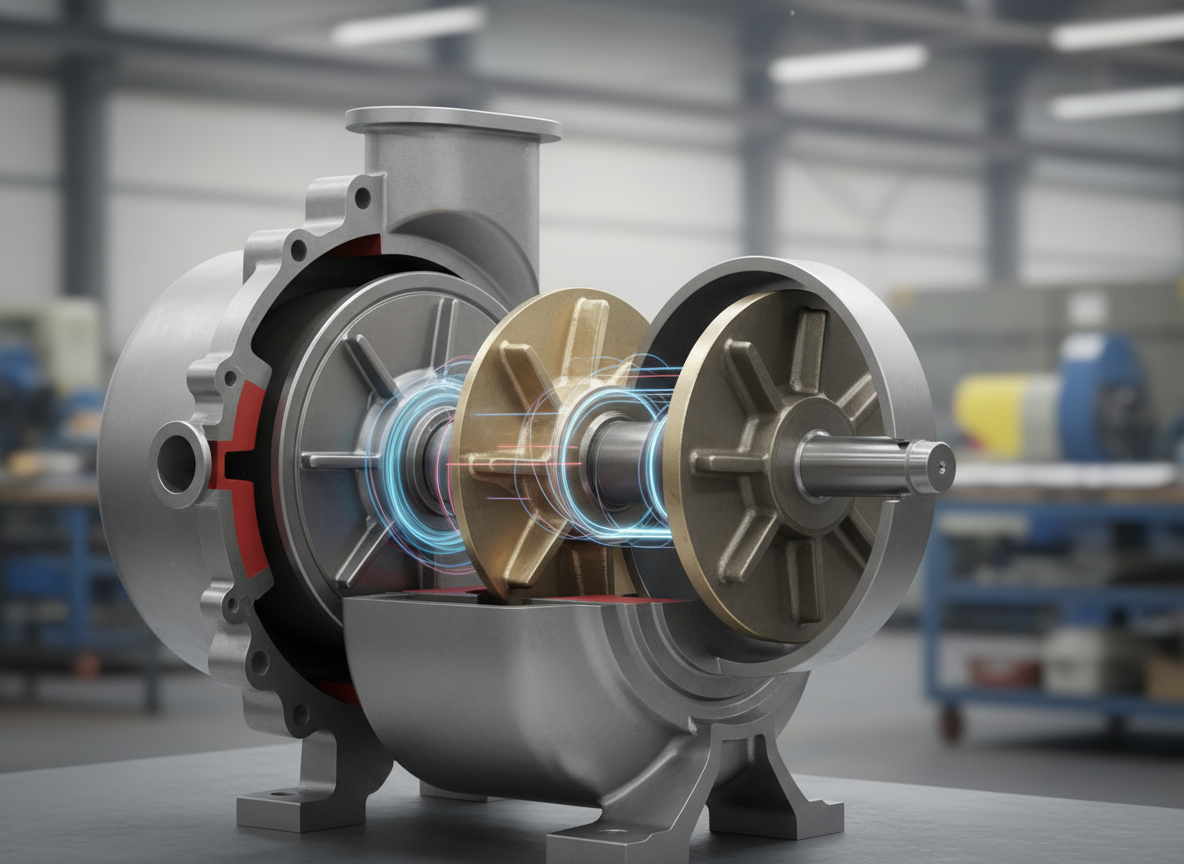
Key Differences Between Open, Semi-Open, Closed, Vortex, Cutter and Screw Impellers
Pump performance often depends on what happens inside the casing. The impeller directly affects how fluids move, how solids are handled, and how efficiently a system operates. Selecting the wrong impeller for centrifugal pumps in Canada can lead to clogging, excessive wear, or energy loss.
Understanding how different impeller types operate helps maintain stable flow, reduce maintenance needs, and support long-term system reliability.
Why Impeller Design Matters in Pump Performance
Impellers transfer energy from the motor to the fluid. Their geometry affects:
- Flow rate and pressure generation
- Ability to handle solids or debris
- Risk of clogging and downtime
- Wear patterns and maintenance intervals
Each design suits a specific operating condition. Matching the impeller to the fluid characteristics improves overall system performance.
People Also Ask
What is the most efficient type of impeller?
Closed impellers offer high efficiency under clean fluid conditions. Their enclosed design reduces energy loss and improves flow control. They are best suited for clean fluids with minimal solids.
Which impeller is best for handling solids?
Vortex and cutter impellers are commonly used for solids-heavy applications. Vortex impellers reduce clogging by limiting contact with solids, while cutter impellers break down debris to maintain flow.
Open Impellers and Where They Work Best
Open impellers consist of vanes attached to a central hub without enclosing walls.
Key characteristics:
- Easier to clean and maintain
- Handles small solids and suspended particles
- Lower efficiency compared to enclosed designs
Typical use cases:
- Light slurry transfer
- Fluids with minor contamination
- Applications requiring frequent inspection
Open impellers perform well where accessibility and flexibility matter more than peak efficiency.
Semi-Open Impellers for Moderate Solids Handling
Semi-open impellers are widely used in centrifugal pumps in Canada. These impellers include a back shroud while leaving the front partially exposed.
Key characteristics:
- Better efficiency than open impellers
- Improved solids handling capability
- Adjustable clearance for wear compensation
Typical use cases:
- Industrial wastewater
- Process fluids with moderate solids
- Chemical transfer with varying viscosity
This design provides a balance between durability and efficiency in mixed-flow environments.
Closed Impellers for Higher Efficiency
Closed impellers feature vanes enclosed between front and back shrouds.
Key characteristics:
- High hydraulic efficiency
- Reduced recirculation losses
- Requires clean or low-solid fluids
Typical use cases:
- Water circulation systems
- Cooling loops and process water
- Applications with minimal contamination
Closed impellers enable energy-efficient operation while maintaining consistent fluid quality.
Vortex Impellers for Difficult Solids
Vortex impellers create a whirlpool effect rather than direct contact with solids.
Key characteristics:
- Solids pass through without direct impeller contact
- Lower clogging risk
- Reduced wear from abrasive materials
Typical use cases:
- Wastewater with large solids
- Sludge handling
- Fibrous or stringy materials
This design prioritizes reliability over efficiency in demanding environments.
Cutter Impellers for Tough Waste Materials
Cutter impellers in centrifugal water pumps feature cutting edges that reduce the size of solids during operation.
Key characteristics:
- Cuts and macerates solids
- Prevents blockages in pipelines
- Supports continuous operation
Typical use cases:
- Sewage systems
- Industrial waste streams
- Applications with rags or fibrous debris
Cutter impellers help maintain flow in systems where the size can disrupt operation.
Screw Impellers for Gentle Fluid Handling
Screw impellers use a helical design to move fluids gradually through the pump.
Key characteristics:
- Low shear handling
- Minimal turbulence
- Effective for viscous fluids
Typical use cases:
- Slurries requiring gentle handling
- Shear-sensitive fluids
- Food-grade or chemical processes
This design supports stable flow without damaging the fluid structure.
Comparing Impeller Types at a Glance
The following table provides a quick reference for decision-making.
| Impeller Type | Efficiency | Solids Handling | Clogging Risk | Typical Application |
| Open | Moderate | Low–Moderate | Medium | Light slurry |
| Semi-open | Moderate–High | Moderate | Medium | Industrial fluids |
| Closed | High | Low | Low | Clean water systems |
| Vortex | Lower | High | Very Low | Wastewater |
| Cutter | Moderate | High | Low | Sewage handling |
| Screw | Moderate | Moderate | Low | Viscous fluids |
Also Read:
Why NPSH Calculations Matter When Selecting Industrial Centrifugal Pumps
How Self-Priming Pumps Compare to Centrifugal Pumps in Industrial Applications
How to Build a Long-Term Partnership with Centrifugal Pumps Suppliers in Canada
How to Select the Right Impeller for an Application
Impeller design directly influences pump performance, reliability, and maintenance needs. Each type serves a distinct purpose, from handling clean fluids efficiently to managing complex solids without clogging.
Key considerations include:
- Solids’ size, shape, and concentration
- Fluid viscosity and temperature
- Required flow rate and pressure
- Risk of clogging or abrasion
- Maintenance access and frequency
Closed impellers suit clean systems requiring efficiency. Vortex or cutter designs are well-suited to solids-heavy applications. Semi-open and open impellers provide flexibility for mixed conditions. Screw impellers address sensitive or viscous fluids.
For systems requiring precise selection and reliable operation, working with experienced centrifugal pump suppliers helps ensure alignment of impeller design. Contact Vissers Sales Corp to learn more about suitable configurations and review available solutions.