
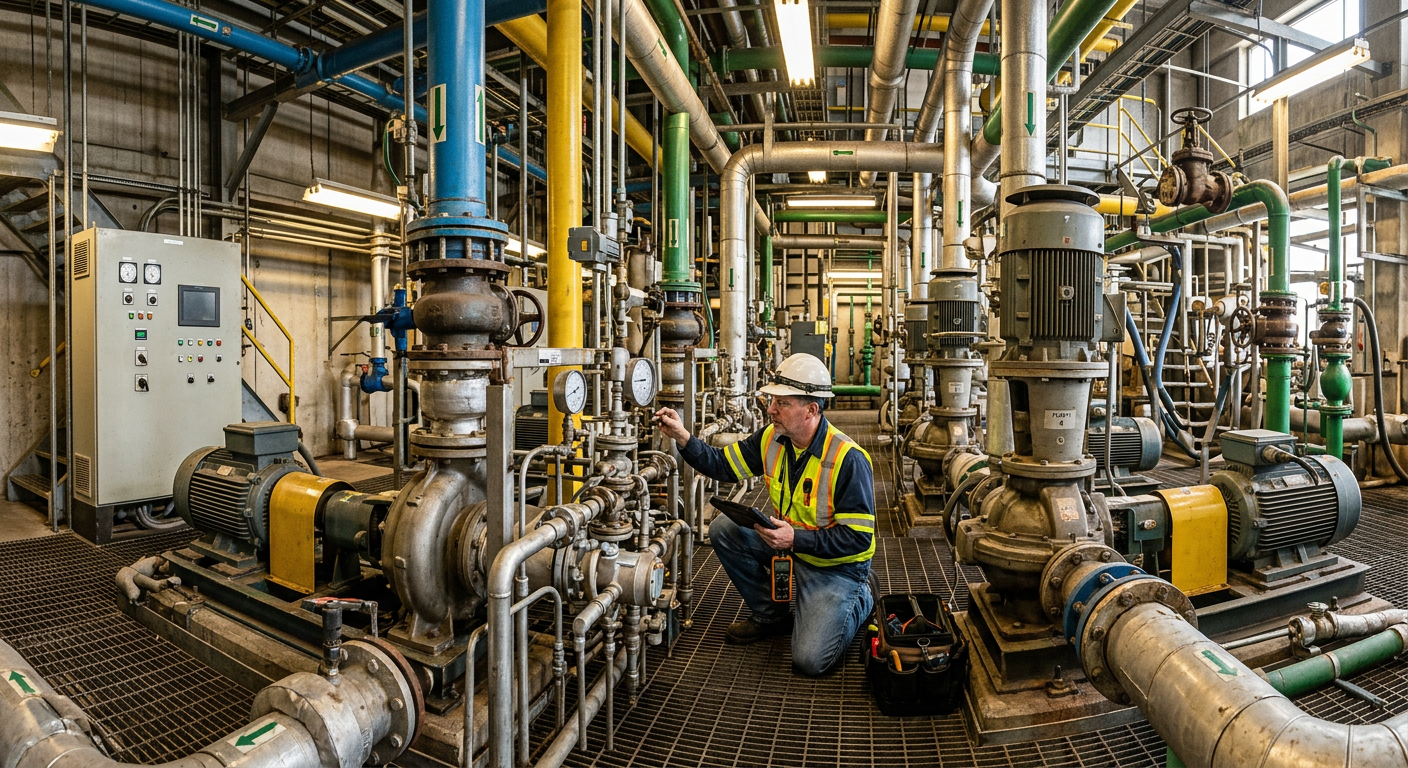
When Your Pump System Has Become Too Complicated to Troubleshoot
Industrial pump systems tend to become more complicated over time. A bypass gets added because production cannot stop. A second sensor is installed because nobody trusts the first one. An alarm is added to catch a recurring issue. A control valve gets throttled because pressure is unstable. Someone changes the VFD logic to compensate.
Every individual decision may make sense. Ten years later, the system has three bypasses, overlapping controls, alarms nobody responds to, temporary fittings that became permanent, and operating procedures that describe only part of what is actually happening.
At that point, the problem is complexity.
Complexity Has a Cost
We usually think about technical debt in software, but industrial systems develop something similar. Let’s call it complexity debt.
Every workaround adds another thing that must be understood, maintained, inspected, and eventually troubleshot. The system becomes harder to read because a technician must first work out which parts of the original design are still relevant.
This is the opposite of what we described in a previous article: The case for boring pump rooms. The boring pump room is predictable. The complicated pump room depends on people remembering exceptions.
The more exceptions you accumulate, the more fragile the system becomes.
Another Component Is Not Always Another Solution
When a system doesn’t perform as it should, the natural instinct is often to add something. Pressure fluctuates, so we add another control. Flow is unstable, so we install another valve. An alarm keeps appearing, so we add a second alarm to distinguish one condition from another.
Sometimes that is exactly the right engineering answer. Sometimes it is an expensive way of avoiding the original question: why is the system unstable in the first place?
Adding another component means another failure point, another maintenance requirement, another spare part, and another piece of information an operator needs to understand.
Before adding complexity, it is worth asking whether the existing system can be corrected instead.
Layers of Workarounds Eventually Hide the Original Problem
Temporary fixes are particularly dangerous because one workaround often leads to the next. A pump is oversized, so a valve is throttled. The throttling creates unstable pressure, so the control settings are adjusted. The adjusted controls cause poor low-flow performance, so a bypass is added. The bypass creates confusing readings, so another pressure sensor is installed.
Eventually, nobody is troubleshooting the original pump sizing problem. They are troubleshooting the network of solutions that grew around it.
That is the long-term risk we explored in this article: The real cost of temporary fixes in industrial pump systems. A workaround becomes much more expensive once other decisions begin depending on it.
Simplification has Operational Value
Removing unnecessary complexity can be one of the most effective reliability improvements a facility makes. That might mean removing an obsolete bypass. It might mean standardizing sensors. It could involve consolidating alarms, restoring valves to their intended operating positions, or rewriting control logic so operators no longer need manual interventions.
The goal is clarity. When someone looks at the system, the relationship between cause and effect should be understandable. If pressure drops, the team should know where to look. If a pump stops, they should know what takes over. If an alarm sounds, they should understand what action it requires.
(Further reading: That is one of the principles we’ve laid out in this article: What does good system design look like in a pump room?)
When Should You Repair, Redesign, or Start Fresh?
There is no universal threshold, but a few questions are useful. Can your experienced operators explain the system without relying on undocumented exceptions? Can maintenance isolate and service equipment without temporary rerouting? Are controls solving actual process requirements, or compensating for mechanical problems? Are multiple recurring alarms symptoms of one unresolved issue?
If answering those questions becomes difficult, the system may need more than another repair.
Sometimes repairing the original problem is enough. Sometimes a section of the system needs redesign. Occasionally, years of accumulated changes make a clean start less expensive than preserving every historical workaround.
The mistake is assuming that because the system still operates, preserving its existing complexity is automatically the lowest-risk option.
As we discussed in Why set and forget is the most expensive strategy in fluid handling, systems change over time. The question is whether those changes are being managed deliberately or simply accumulated.
Clear Ownership Keeps Complexity From Growing Back
Simplification will not last unless someone owns the system. Changes should have a reason, an owner, and documentation. Temporary bypasses should have removal dates. Control changes should be recorded. Alarms should have defined responses. If nobody is responsible for asking whether a modification is still necessary, it will probably stay forever.
Good ownership does not mean preventing change. Industrial systems need to adapt. It means making sure every change earns its place.
For guidance on simplifying your pump system or addressing accumulated complexity, visit Vissers Sales Corp’s industrial pump systems page or contact our team at 1-800-367-4180 to discuss your system’s design and reliability.