
Is Your Industrial Mixer Creating Too Much Foam?
A mixing process can look busy without actually working well. The liquid is moving, the motor is running, and everything appears to be blending. But there is a growing layer of foam on the surface, air bubbles throughout the product, or an unexpected change in texture.
For manufacturers working with chemicals, coatings, food products, or other sensitive materials, unwanted foam can become an expensive problem. It can interfere with filling operations, affect product quality, complicate measurements, and extend production times.
The instinctive solution might be to slow the mixer down or add a chemical defoamer. Sometimes that helps. But the better starting point is understanding why the foam is developing.
Not All Foam Is the Same
Before changing anything, it helps to distinguish between foam formation and air entrainment. Foam forms when gas bubbles are stabilized within a liquid, often because of ingredients such as surfactants. Air entrainment happens when mixing action draws air into the liquid. These problems frequently occur together, but they do not always have the same solution.
A formulation that naturally produces foam may require a different approach from a liquid that is simply being mixed too aggressively. The right mixer should create the movement your process needs without introducing unnecessary problems.
When Faster Mixing Creates More Trouble
One common cause of excessive air entrainment is mixing speed. When a mixer operates too aggressively near the liquid surface, it can create a vortex that draws air into the fluid.
The resulting bubbles may remain suspended in the mixture, particularly when the product is viscous or contains ingredients that stabilize foam. Increasing the speed can make matters worse. It may improve circulation in some parts of the tank while introducing additional air and creating problems elsewhere.
This is why selecting an appropriate impeller and operating speed matters. Our article on axial and radial flow impellers explains how different impeller designs influence circulation and shear.
Tank Design and Liquid Level Matter Too
Foaming problems are not always caused by the mixer itself. Tank shape, impeller position, liquid level, and the presence of baffles can all influence how material circulates. For example, an unbaffled tank may allow the liquid to rotate with the impeller, creating a deep surface vortex. Properly designed baffles can help interrupt this rotation and improve mixing effectiveness.
Similarly, an impeller operating too close to the liquid surface may pull air into the process. Changing the mixer speed without considering tank geometry may provide only temporary relief. The goal is to create effective circulation throughout the vessel without unnecessary surface disturbance.
Could Your Mixing Process Be Part of the Problem?
Sometimes foam develops because of how ingredients are introduced. Adding a foaming chemical directly into a highly turbulent area may encourage bubble formation. Introducing ingredients too quickly can also complicate blending, particularly when powders, surfactants, or viscous materials are involved.
Temperature can make a difference as well. Changes in viscosity and surface behaviour can affect how readily bubbles form and escape. Before adding defoaming chemicals, review the ingredient addition sequence, operating temperature, and mixing conditions. A process adjustment may offer a simpler solution.
Choosing the Right Mixing Approach
Different applications require different levels of circulation and shear. A process designed to keep solids suspended has different requirements from one intended to gently blend sensitive ingredients.
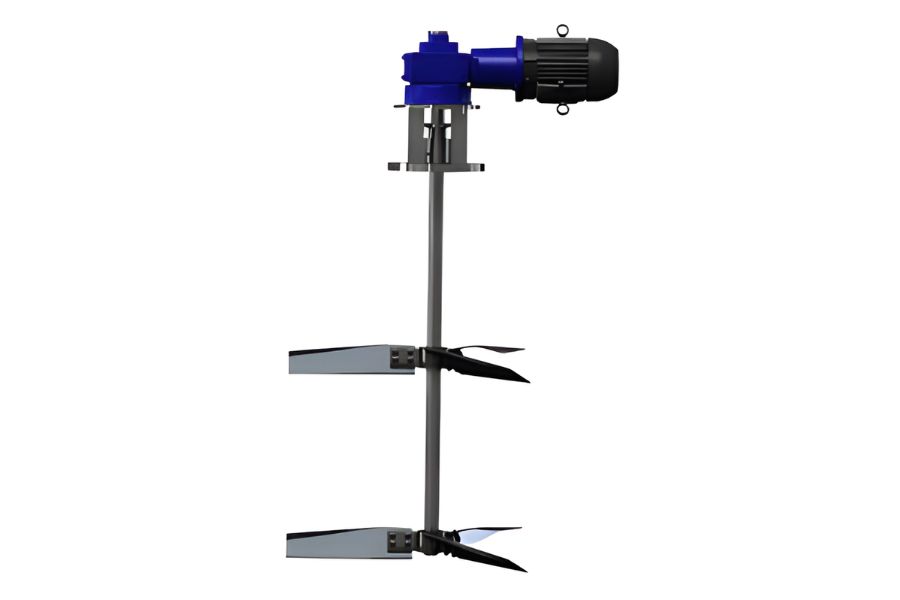
In some applications, a carefully selected top-entry mixer can provide controlled circulation while limiting unnecessary agitation.
For continuous-flow processes, inline static mixers may offer another approach. These use fixed mixing elements rather than a rotating impeller, although pressure drop, fluid properties, and mixing requirements still need careful evaluation.
Neither option suits every application. The right choice depends on the process. At Vissers Sales Corp., our approach is to look at the required mixing result before recommending equipment.
How to Troubleshoot Excessive Foam
If foam is becoming a recurring problem, start with a few practical questions.
- Has the mixer speed changed?
- Is the liquid level lower than usual?
- Has the formulation or ingredient supplier changed?
- Are ingredients being added in the same sequence?
- Is a surface vortex drawing air into the liquid?
- Are tank geometry and impeller placement appropriate?
Reviewing these factors can help identify whether the problem is mechanical, operational, or related to the formulation. Any changes to speed, geometry, or operating procedures should be assessed against the manufacturer’s recommendations and the process requirements.
Having trouble with foam, excessive air entrainment, or inconsistent industrial mixing? The team at Vissers Sales Corp. can help you evaluate your application and identify suitable industrial mixing equipment.
Call us toll-free at 1-800-367-4180 to discuss your requirements.