
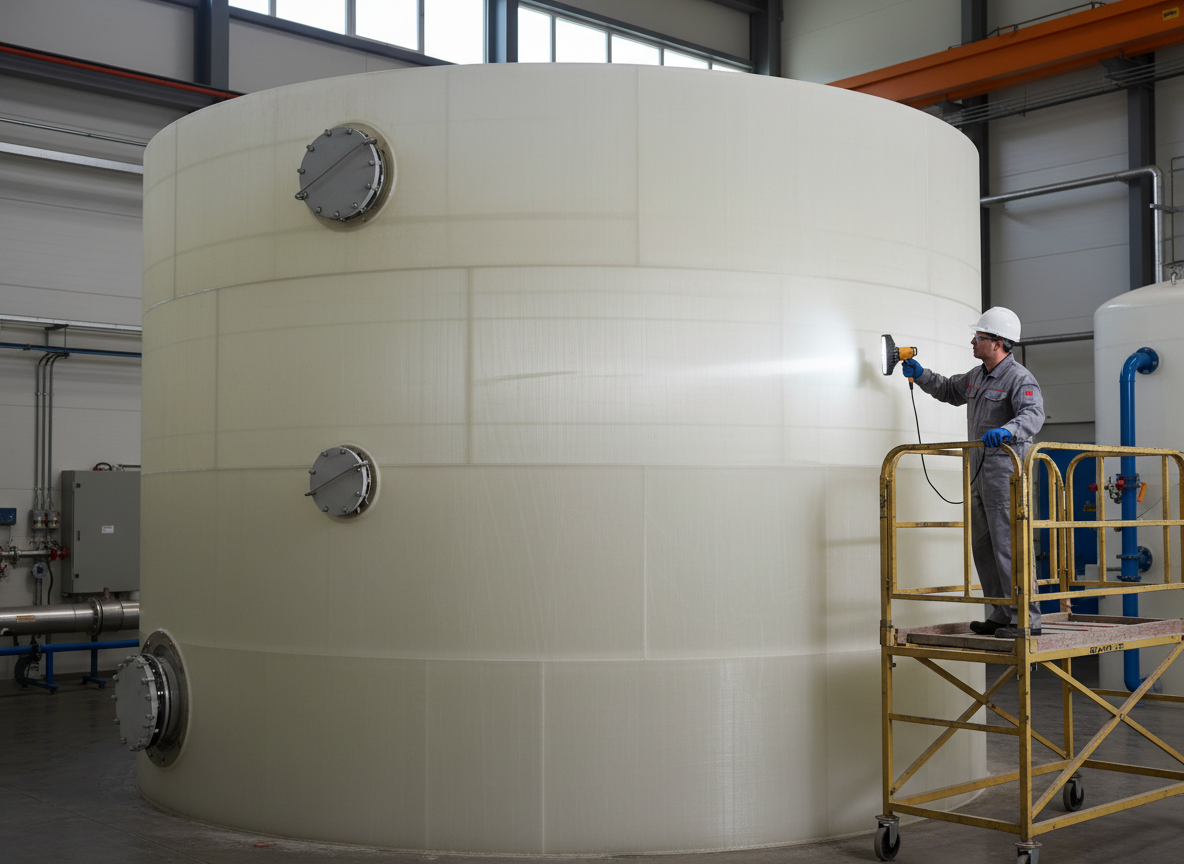
Steps to Safely Clean and Inspect Fibreglass Tanks for Long-Term Use
Fibreglass reinforced plastic (FRP) tanks are essential across industrial operations for their corrosion resistance, strength, and long service life. Yet, like any storage system, even FRP tanks require consistent cleaning and inspection to maintain integrity and safety.
Neglecting this routine can lead to residue buildup, structural damage, or contamination in the tank. These issues compromise both tank performance and the materials inside the tank. This guide outlines the essential steps industries follow to safely and effectively clean and inspect FRP tanks for long-term use.
Why Maintenance Matters for FRP Water Storage Tanks
Regular maintenance extends the working life of FRP tanks and reduces the risk of unexpected downtime. Over time, residues from chemicals, water, or process fluids accumulate on internal surfaces. Exposure to ultraviolet radiation, temperature shifts, or chemical stress can also weaken resin layers.
Proactive inspection and cleaning programs help identify early signs of damage, before they develop into leaks or delamination.
1. Prepare the FRP Storage Tank and Work Area
Safety for FRP tanks begins before cleaning starts. Preparation ensures that personnel and equipment remain protected throughout the process.
- Drain and Isolate the Tank: Ensure proper removal of all liquid contents and effective closure of valves.
- Ventilate the Workspace: Maintain airflow to prevent the accumulation of fumes from residual chemicals.
- Wear Protective Gear: Use gloves, respirators, and eye protection suitable for handling FRP materials and cleaning agents.
- Review Safety Data Sheets (SDS): Confirm chemical compatibility between the cleaning solution and the tank’s resin system.
Proper preparation minimizes hazards and protects the internal tank surface from unintended chemical reactions.
2. Rinsing and Residue Removal for FRP Tanks
After establishing safe access, begin with a thorough rinse using clean water. A low-pressure wash is generally sufficient to remove surface deposits, scale, or sediment. For heavier buildup, use non-abrasive brushes and a mild, approved cleaning solution.
- Avoid metal tools or scrapers that can scratch the inner lining.
- Rinse multiple times to ensure complete removal of all cleaning agents.
- Inspect drain and vent lines during this step to confirm unrestricted flow.
This stage restores the clean surface necessary for accurate visual inspection.
3. Inspecting Internal and External Surfaces of FRP Tanks
After drying the tank, perform a detailed inspection to identify potential signs of damage or wear. Common areas of concern include seams, fittings, and high-stress zones around nozzles or supports.
Internal inspection checklist:
- Look for blisters, cracks, or delamination in the resin layer.
- Check for signs of chemical attack, such as softening or discoloration.
- Verify that welds or joints remain intact and fully bonded.
External inspection checklist:
- Examine the tank shell for abrasions, UV damage, or fibre exposure.
- Confirm that structural components such as supports, ladders, and fittings are secure.
- Assess the condition of gaskets and sealing materials.
If there are any observable defects in the FRP water storage tank, it is important to document them immediately. Review them with maintenance or engineering personnel before the tank returns to service.
4. Evaluating Structural Integrity of FRP Water Storage Tanks
Beyond visual checks, periodic non-destructive testing can confirm the mechanical soundness of an FRP tank. Standard assessment methods include:
- Ultrasonic thickness testing to measure wall uniformity.
- Acoustic emission testing to detect micro-cracks under stress.
- Hydrostatic pressure testing to confirm leak resistance after repairs.
These evaluations help confirm that the tank maintains its designed pressure and chemical resistance over time.
5. Protective Measures for Fibreglass Reinforced Plastic Tanks
Once inspection and testing are complete, specific protective steps can extend the lifespan of the fibreglass tank:
- Reapply UV-resistant coatings to exposed external surfaces.
- Replace worn gaskets or fittings before leaks develop.
- Maintain corrosion-resistant linings for aggressive chemical storage.
- Document maintenance activities in service logs for traceability.
Routine coating and sealant renewal help maintain performance under continuous industrial duty.
6. Maintenance Scheduling for FRP Water Storage Tanks
Consistency is key to long-term reliability. Establish a routine cleaning and inspection schedule based on tank usage, stored media, and environmental conditions. Most facilities inspect fibreglass tanks at least once a year, with more frequent reviews for chemical storage or high-temperature service.
Timely maintenance minimizes repair costs and ensures continued compliance with industry standards.
Also Read:
How Tailored Storage Tanks Maximize Efficiency
How Can FRP Tanks Help in Industrial Fire Suppression
How Damage Progression Shapes the Performance of FRP Tanks
Supporting Safe, Efficient Operations
FRP storage tanks are essential industrial assets. With regular maintenance, these units support consistent service in chemical processing and water treatment applications.
By following these steps, operators maintain the safety, cleanliness, and efficiency that industrial applications depend on. Structured inspection and cleaning routines safeguard against corrosion, contamination, and failure.
For durable, industry-ready fibreglass reinforced plastic tanks, contact Vissers Sales Corp. to review reliable options designed for industrial use.