
Small Maintenance Wins Add Up to Plant-Wide Stability
Plant stability rarely comes from one heroic project. It comes instead from a pattern of small wins that keep stacking. A cleaner strainer. A better setpoint. A sensor replaced before it fails. A spare part that’s ready when you need it. None of these moves feel dramatic in the moment, but together they steadily reduce downtime, reduce stress, and improve performance across the site.
The compounding starts with visibility. If you cannot see drift early, you only learn about problems when they become failures. That is why the simplest shift logs are so effective. Logging suction pressure, discharge pressure, VFD speed, strainer differential pressure, and a short note takes two minutes. Over weeks, it becomes a record of system health. You start to notice that suction pressure falls before cavitation shows up, or that VFD speed rises before a strainer plugs completely. Those patterns let you act on Tuesday at 10 a.m., instead of Friday at 2 a.m. (For more on this, please read this article: No More 2 A.M. Call-Outs: Make Your Pump System Reliable)
Once you have visibility, you can reduce noise. Many plants are drowning in alarms, and when everything is urgent, nothing is. A stable facility uses fewer alarms, but better ones. The goal is to alert only on conditions that require action, then route those alerts to a named owner. When the alarm list is lean, people respond faster. When ownership is clear, follow-through improves. Over time, the plant moves from reacting to alarms to preventing them, which is where stability really starts to build.
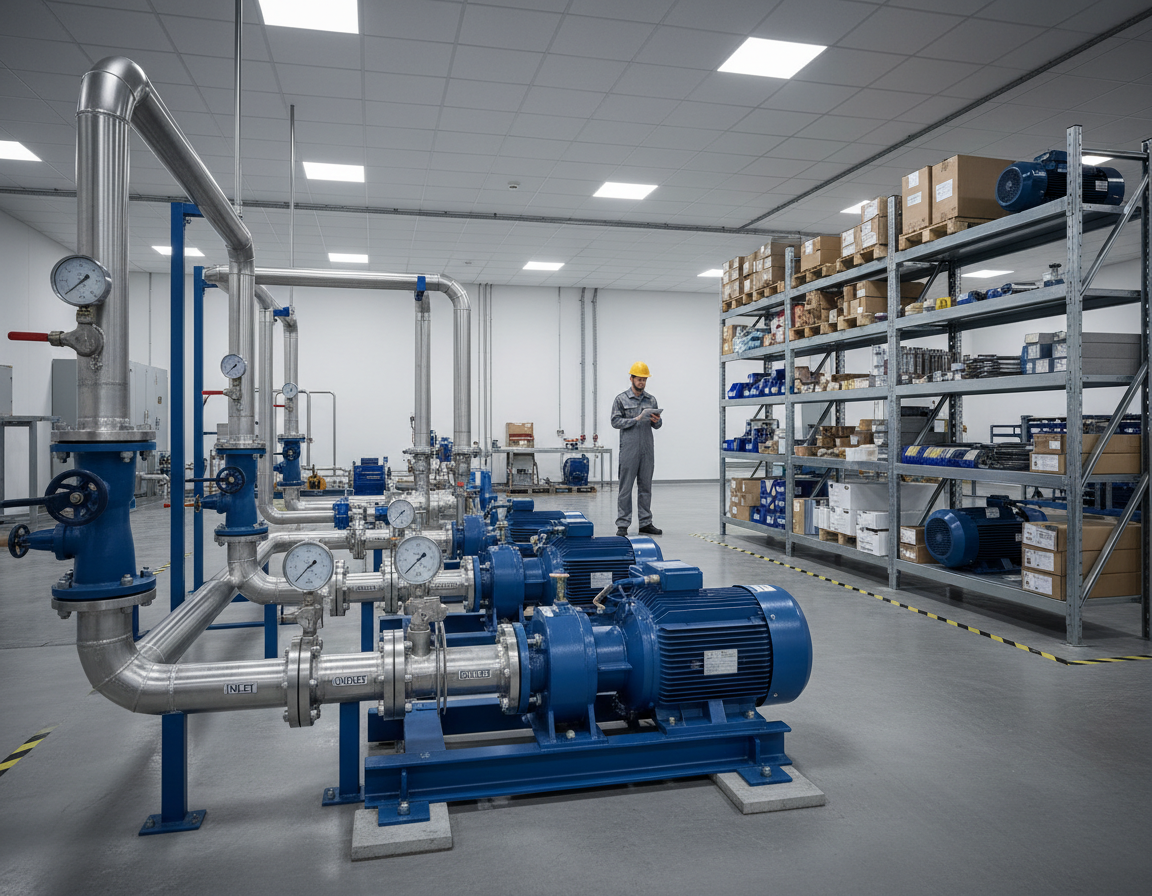
The next lever is spares. Most downtime is not caused by the failure itself. It is caused by waiting. Waiting for a pressure transducer. Waiting for a check valve kit. Waiting for a seal. The difference between a two-hour issue and a two-day outage is often a small bin of critical parts. A “better spares” approach means stocking what stops production and takes too long to get quickly. For pump systems and chemical skids, that usually includes pressure transducers, strainer gaskets and baskets, relief valve rebuild kits, injection quill check tips, a seal kit or cartridge seal, and a few common fittings and tubing. When those parts are on-site, downtime drops and confidence rises.
This is where the compounding effect becomes obvious. Better logs reduce surprises. Fewer, smarter alarms reduce distraction. Better spares reduce repair duration. Each win frees up time and attention, and that extra capacity makes the next improvement possible. Maintenance stops being a constant emergency response and becomes planned work, done with calmer heads and better outcomes. Planned work further reduces failures, which creates more capacity. And momentum builds.
The culture piece is what makes it stick. Tools and checklists are important, but they do not matter if people treat reliability as someone else’s job. Well-maintained plants build a shared belief that small problems deserve early attention. They celebrate catches, not just fixes. When an operator logs a rising strainer differential and maintenance cleans it before a trip, that should be recognized. It is the reliability equivalent of preventing an accident. It matters more than heroics after the fact.
Leaders also protect these gains by making reliability easy to do. They keep logs short and visible. They keep procedures simple. They make sure alarms go to the right people. They replace blame with learning. If an alarm was missed, the question is not “who failed?” It is “what in the system made it easy to miss?” That mindset keeps people engaged instead of defensive, and engagement is what keeps the small wins stacking.
If you want plant-wide stability, start with small maintenance wins that you can repeat. Then watch what happens over months: fewer surprises, faster fixes, steadier systems, and a team that spends more time improving and less time reacting. That is how stability is built, one small win at a time.
Vissers Sales Corp. specializes in optimizing pump systems to ensure maximum reliability and minimum operating cost. Reach out to us in Canada toll-free on 1-800-367-4180 to get a conversation started.