
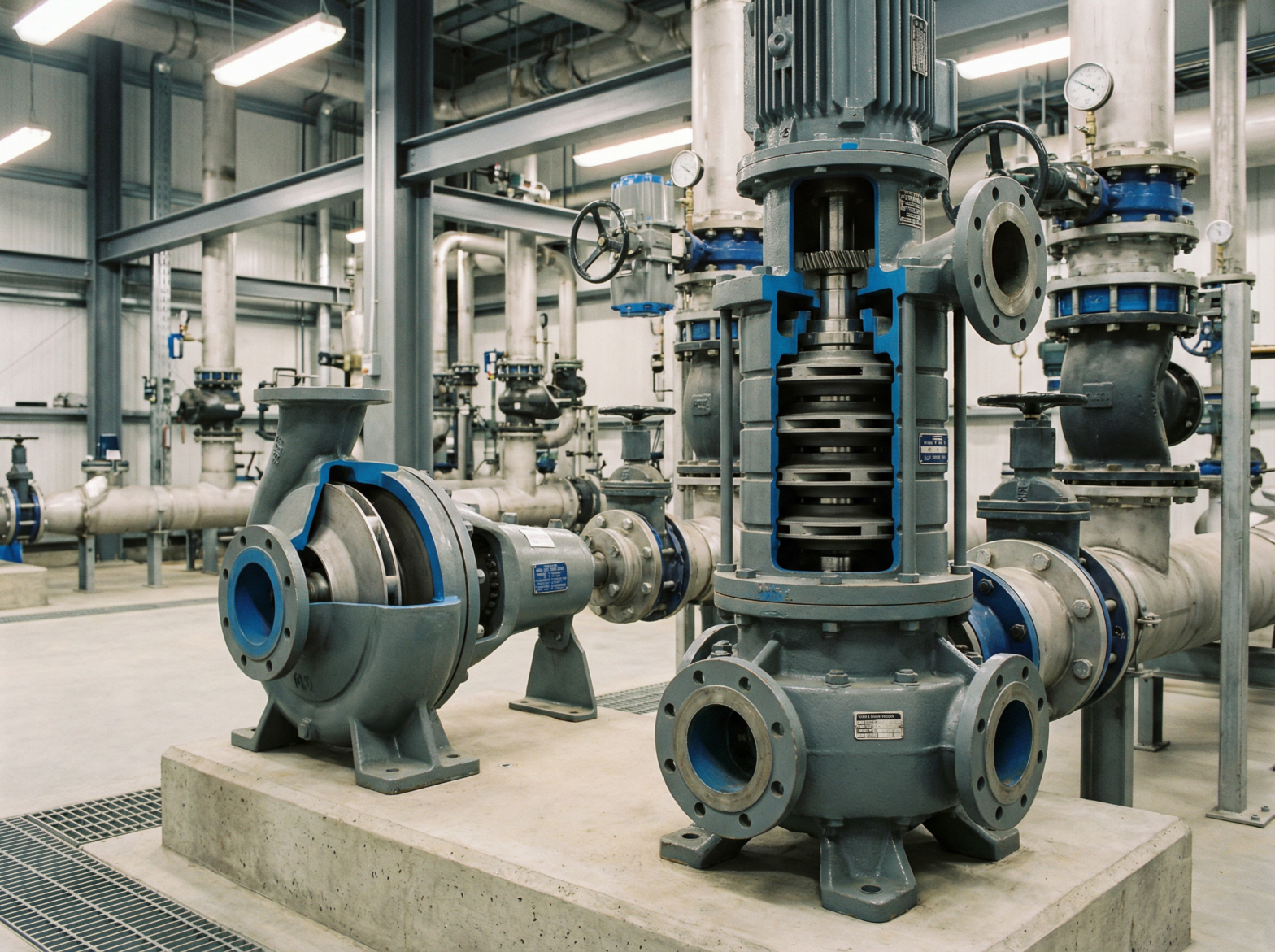
Single-Stage vs Multi-Stage Centrifugal Water Pumps
Centrifugal pumps support countless industrial processes, from water transfer to pressure boosting. While many systems rely on similar pump designs, performance often depends on one key factor: stage configuration.
Understanding the difference between single-stage and multi-stage centrifugal water pumps is essential. It helps businesses select equipment that aligns with flow demands, pressure requirements, and long-term system reliability.
Why Stage Configuration Matters for Centrifugal Water Pumps
Stage configuration refers to the number of impellers inside a centrifugal pump. Each impeller adds energy to the fluid. This directly affects how much pressure the pump can generate.
Selecting the correct stage configuration supports
- Stable system pressure
- Consistent flow rates
- Lower energy losses
- Reduced mechanical stress
When the stage configuration does not match system requirements, inefficiency and premature wear often follow.
What Is a Single-Stage Centrifugal Pump?
A single-stage centrifugal pump uses one impeller to move fluid. The impeller converts rotational energy into velocity, which then becomes pressure as the fluid exits the pump casing.
These pumps are common in applications that require moderate pressure and steady flow.
Typical characteristics include:
- One impeller
- Simple internal design
- Lower initial complexity
- Efficient operation at lower heads
Single-stage centrifugal water pumps work well in applications where moving volume matters more than building pressure.
What Is a Multi-Stage Centrifugal Pump?
A multi-stage centrifugal pump contains two or more impellers arranged in series. Each stage increases pressure before passing the fluid to the next impeller. This design allows the pump to achieve higher discharge pressure without increasing impeller diameter.
Key features include:
- Multiple impellers stacked along a shaft
- Gradual pressure increase across stages
- Compact footprint for high-pressure duties
- Controlled flow under demanding conditions
Multi-stage centrifugal pumps are common in applications where pressure requirements exceed the limits of single-stage designs.
Key Differences Between Single-Stage and Multi-Stage Centrifugal Pumps
While both types of industrial centrifugal pumps rely on the same operating principle, their performance profiles differ significantly. Some of the core differences include:
Pressure capability
- Single-stage pumps generate lower discharge pressure.
- Multi-stage pumps produce higher pressure by adding energy at each stage.
System complexity
- Single-stage designs are mechanically simpler.
- Multi-stage pumps involve additional components and tighter tolerances.
Energy behaviour
- Single-stage pumps perform efficiently in low-head systems.
- Multi-stage pumps distribute energy across stages to manage higher heads.
Maintenance considerations
- Single-stage pumps are easier to inspect and service.
- Multi-stage pumps require more detailed maintenance planning.
Understanding these differences helps prevent overdesign or underperformance.
How System Requirements Influence Stage Selection
Matching stage configuration to system demand supports consistent performance and operational stability. Flow rate, total dynamic head, and operating conditions determine whether a single-stage or multi-stage centrifugal water pump is appropriate.
Key system factors include:
- Required discharge pressure
- Elevation changes
- Piping length and friction losses
- Fluid properties such as temperature and viscosity
High-pressure applications often benefit from multi-stage designs, while systems focused on volume transfer typically align with single-stage pumps. Matching stage configuration to system demand supports consistent performance and operational stability.
Common Selection Mistakes and How to Avoid Them
Improper stage selection is a frequent source of pump inefficiency.
Frequent issues include:
- Choosing a single-stage pump for high-head systems
- Using multi-stage centrifugal suction pumps where the pressure demand is minimal
- Ignoring the system curve and operating range
- Oversizing pumps to compensate for uncertainty
These mistakes increase energy consumption and accelerate wear. Accurate system data and application-specific evaluation reduce these risks. A structured selection approach ensures the pump operates near its intended efficiency point.
Also Read:
Common Reasons for Pressure Drop in a Centrifugal Pump
Centrifugal Pumps in Canada: The Key Players in Industrial Settings
The Impact of Variable Frequency Drives (VFDs) on Centrifugal Pump Performance and Lifecycle
Choosing the Right Stage Configuration Improves System Performance
Single-stage and multi-stage designs serve different operational roles. Performance depends on system requirements rather than configuration type. When stage configuration matches pressure and flow demands, businesses benefit from:
- Predictable operation
- Lower lifecycle costs
- Improved equipment longevity
- Reduced unplanned downtime
Careful evaluation at the selection stage supports long-term reliability and process efficiency.
Partnering with the right centrifugal pump supplier is essential to selecting the right pump configuration. Contact Vissers Sales Corp. to discuss system requirements and application needs.