
How Magnetic Drive Pumps Contribute to Safer Operations in Hazardous Environments
Handling hazardous fluids demands consistent control, reliable containment, and minimal risk of exposure. Many industrial systems rely on pumps operating under pressure, temperature, and chemical stress. Even a small leak can lead to safety incidents, environmental concerns, and unplanned downtime.
Mag drive pumps address these concerns by removing one of the most common failure points in traditional pump systems. Their design focuses on sealed operation, reduced maintenance exposure, and controlled fluid movement. These factors make them a practical solution for applications where safety cannot be compromised.
People Also Ask
Why are magnetic drive pumps safer than traditional pumps?
Magnetic drive pumps are safer because they eliminate mechanical seals, which are a common source of leaks. Their sealed design keeps hazardous fluids contained, reducing exposure risks and improving overall system reliability.
What are the limitations of magnetic drive pumps?
Magnetic drive pumps can be sensitive to dry running and require proper system controls to prevent damage. They also need careful material selection to ensure compatibility with the fluid being handled.
Understanding the Risks of Pumping Hazardous Fluids
Hazardous fluids present several operational risks. These risks increase when systems depend on components that can wear, degrade, or fail under pressure.
Common risks include:
- Chemical Exposure: Leaks can release corrosive or toxic fluids into the surrounding environment
- Environmental Impact: Spills can affect soil and regulatory compliance
- Equipment Damage: Aggressive fluids can degrade seals and internal components
- Operational Downtime: Unexpected failures interrupt production and increase costs
Traditional pump systems often rely on mechanical seals to contain fluids. Over time, these seals can wear due to friction, temperature variation, or chemical attack. When seals fail, leakage becomes a serious concern.
What Makes Magnetic Drive Pumps Different
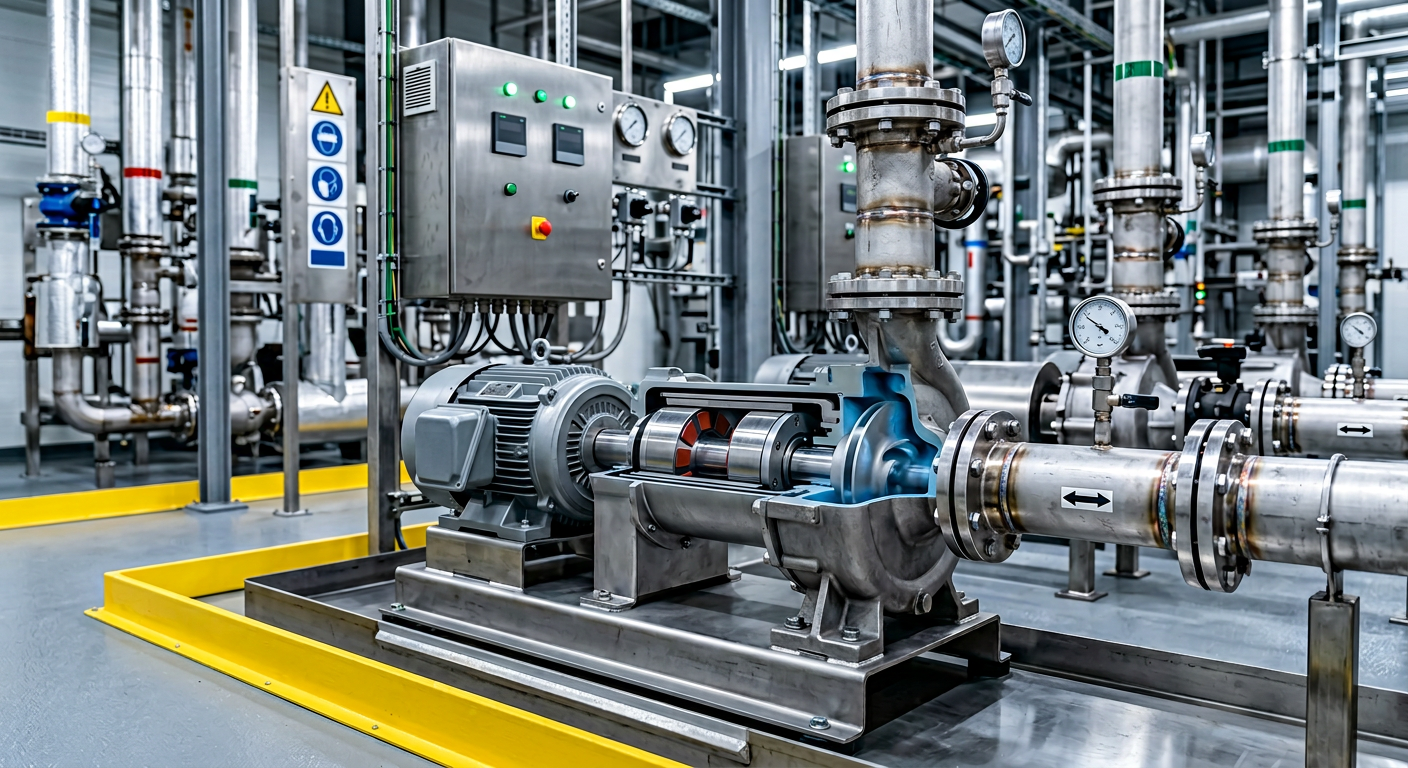
Mag drive pumps operate without a direct mechanical connection between the motor and the impeller. Instead, they use a magnetic coupling system to transfer torque.
Key design features include:
- Magnetic Coupling: External and internal magnets transmit motion through a sealed barrier
- Containment Shell: A sealed casing prevents fluid from escaping the pump chamber
- No Shaft Penetration: Eliminates the need for mechanical seals
This design creates a fully enclosed system. Fluid remains contained within the pump housing during operation. The absence of a seal reduces the likelihood of leakage.
How Eliminating Mechanical Seals Improves Safety
Mechanical seals are often the weakest point in conventional pump systems. They depend on precise alignment and continuous lubrication. Over time, wear is inevitable. Magnetic drive pumps eliminate this dependency.
Safety improvements include:
- Zero Seal Leakage: No seal means no seal-related failure
- Reduced Exposure Risk: Operators are less likely to encounter hazardous fluids during operation
- Lower Maintenance Interaction: Fewer components require adjustment or replacement
- Improved System Integrity: A sealed design maintains containment even under demanding conditions
By removing seals, the system becomes more predictable. This reduces the chances of unexpected release events.
Industrial Environments Where Safety Matters Most
Magnetic drive centrifugal pumps are commonly used in environments where fluid containment is critical.
Typical applications include:
- Chemical Processing Plants: Handling acids, solvents, and reactive compounds
- Pharmaceutical Production: Maintaining clean and controlled fluid transfer
- Petrochemical Facilities: Managing flammable or volatile liquids
These environments require consistent performance and strict adherence to safety standards. Equipment selection plays a direct role in maintaining compliance.
Operational Benefits Beyond Safety
While safety is a primary advantage, magnetic drive pumps also offer operational benefits that support system performance.
Key benefits include:
- Reduced Maintenance Requirements: Fewer wear components lead to longer service intervals
- Lower Lifecycle Costs: Less frequent repairs and replacements reduce the total cost of ownership
- Stable Operation: Consistent performance without seal-related fluctuations
- Improved Energy Efficiency: Optimized design supports steady fluid movement
These advantages help maintain predictable operations. Systems can run with fewer interruptions and less manual intervention.
Important Considerations When Selecting Magnetic Drive Pumps
Proper selection ensures that magnetic drive pumps perform reliably in demanding conditions. Several factors should be evaluated during the selection process.
Key considerations include:
1. Fluid Properties
- Chemical composition and compatibility
- Viscosity and density
- Temperature range
Material selection must align with the fluid being handled. Incorrect material choices can lead to premature wear or failure.
2. Operating Conditions
- Flow rate requirements
- Pressure and head conditions
- System configuration
The pump must operate within its performance range to maintain efficiency and avoid internal stress.
3. Dry Run Sensitivity
Magnetic drive pumps rely on the pumped fluid for cooling and lubrication. Dry running can cause internal damage.
Preventive measures include:
- Installing flow sensors
- Using level controls
- Ensuring proper system priming
4. System Integration
- Compatibility with existing piping and controls
- Ease of installation and maintenance access
- Alignment with safety protocols
A well-integrated system supports consistent performance and simplifies operation.
Also Read:
Magnetic Drive Pumps vs. Electric Diaphragm Pumps
Evaluating the Common Concerns About Mag Drive Pumps
The Importance of Material Selection in Mag Drive Pumps for Corrosive Fluids
Supporting Safer Fluid Handling Through Proper Equipment Selection
Safety in hazardous fluid handling depends on both equipment design and system planning. Magnetic drive pumps offer a solution that addresses common risks associated with leakage and exposure to maintenance
Their sealed construction, reduced component wear, and predictable operation contribute to safer working environments. Proper system design and monitoring enable reliable and controlled fluid transfer.
Selecting the right pump is not only a technical decision. It directly affects safety outcomes, operational continuity, and long-term system performance.
For applications requiring reliable, contained fluid handling, reviewing suitable configurations is critical. Contact Vissers Sales Corp. to learn more about available magnetic drive pump solutions.