
Dosing Problems are Usually Process Problems, Not Pump Problems
When chemical dosing goes sideways, the metering pump is often the first suspect. It’s visible, it moves, and it has a setpoint on a screen. But in our experience, many dosing issues are really process issues wearing a pump costume. The pump is the messenger, not the culprit.
The most common source of dosing trouble is temperature. Chemicals behave differently as temperatures change, especially sodium hypochlorite, caustics, and some polymers. Viscosity shifts can affect suction performance and check valve sealing. Gas formation increases as temperature rises, which can create air pockets that the pump cannot compress and move reliably. If dosing accuracy drifts with weather or time of day, temperature is often the hidden driver. Before you change the pump, measure the chemical temperature at the tank and at the suction line and look for correlations.
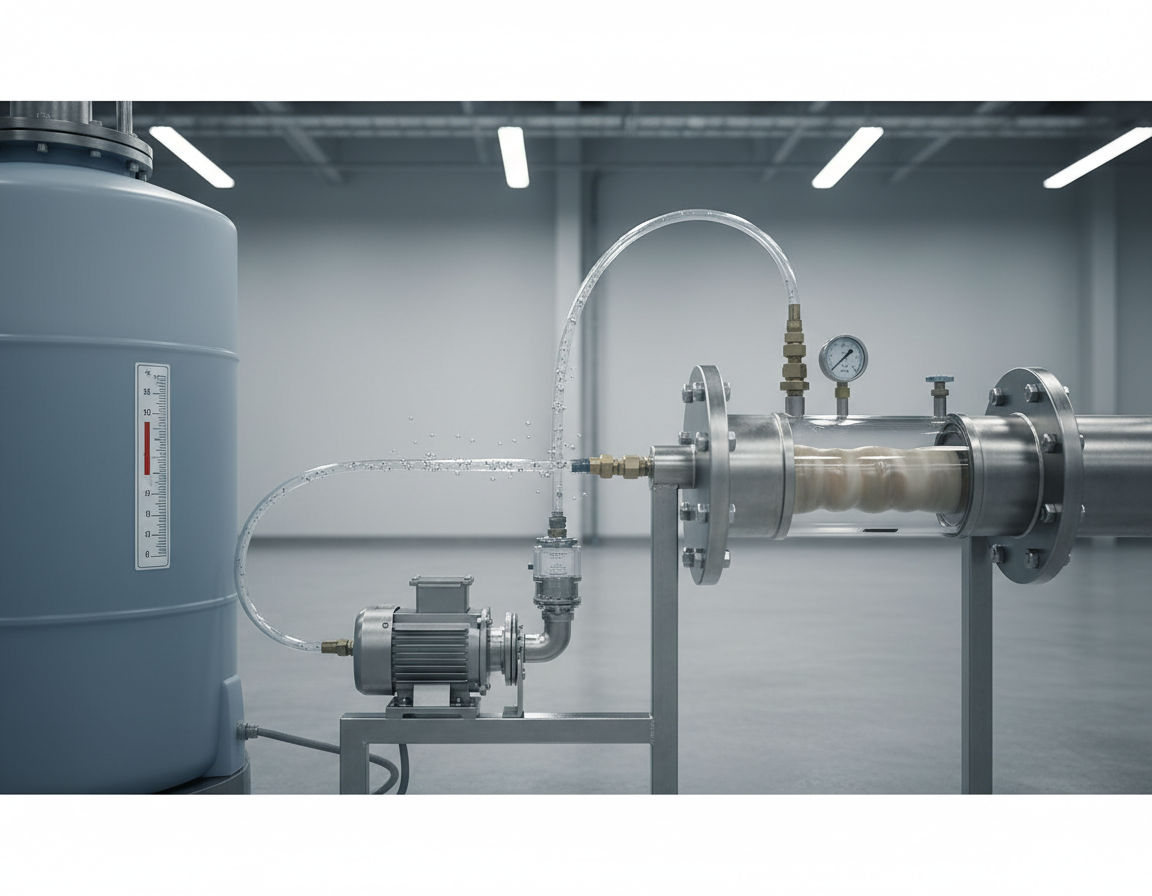
Degassing is another frequent cause, particularly with hypochlorite. Even a well-sized pump can struggle if it is pulling a stream that includes micro-bubbles or trapped gas. Those bubbles reduce the delivered volume per stroke and make the output erratic. Symptoms often include a “spongy” discharge line, pressure fluctuations, and a dose rate that looks correct on paper but fails in reality. The fix is usually on the suction side – shorter and straighter suction runs, tighter fittings to stop air ingress, flooded suction where possible, and a degassing head or venting strategy that allows gas to escape before it enters the pump.
Dilution water creates its own set of problems. Many systems rely on dilution for safe injection and better mixing, but inconsistent dilution flow can make a stable pump look inaccurate. If the dilution water pressure varies, the chemical concentration at the injection point changes even if the pump’s output does not. This can lead to unstable pH control, inconsistent disinfection residuals, or process variability that gets blamed on the pump. The troubleshooting move here is to verify dilution flow and pressure alongside chemical dosing flow. If dilution varies, fix the water supply or control valve before you recalibrate the pump.
The injection location is the quiet troublemaker. A metering pump can deliver the correct dose and still fail the process if the chemical is injected into a dead zone, too close to a sensor, or against the wall of a pipe. Poor injection placement causes stratification, delayed mixing, and misleading readings. For example, injecting too close upstream of a pH probe can “shock” the sensor and cause the controller to overcorrect, creating oscillation that looks like dosing failure. Proper injection typically means using an injection quill that reaches the centerline, placing it in a high-velocity zone, and allowing adequate mixing distance before measurement. If the chemistry only works at certain flows, injection placement and mixing are often the reason.
So how do you troubleshoot without blaming the pump? Start by separating “pump output” from “process result”. Verify pump output with a calibration column and a stopwatch, because that test is simple and definitive. If the pump is delivering within an acceptable tolerance, stop adjusting it. Move upstream and downstream. Check suction conditions for air and restriction. Check chemical temperature and storage practices. Confirm dilution flow is stable. Inspect the injection quill tip and check valve. Confirm the injection point location relative to mixing and sensors. You will often find that the pump has been doing its job all along.
This mindset matters because pump changes can be expensive and disruptive, and they do not fix process flaws. If the real issue is gas formation, a new pump will still pull bubbles. If the issue is poor mixing, a bigger pump can make the oscillation worse. If the dilution water is unstable, more chemicals won’t make the readings stable. The fastest path to reliable dosing is to treat the dosing system as a chain, not a single component.
Metering pumps are precise machines, but they cannot overcome unstable suction, inconsistent dilution, or poor injection geometry. When dosing looks wrong, resist the urge to chase the setpoint. Verify the pump, then interrogate the process. Most of the time, the fix is simpler, safer, and cheaper than replacing the pump.
Vissers Sales Corp. specializes in optimizing pump systems to ensure maximum reliability and minimum operating cost. Reach out to us in Canada toll-free on 1-800-367-4180 to get a conversation started.