
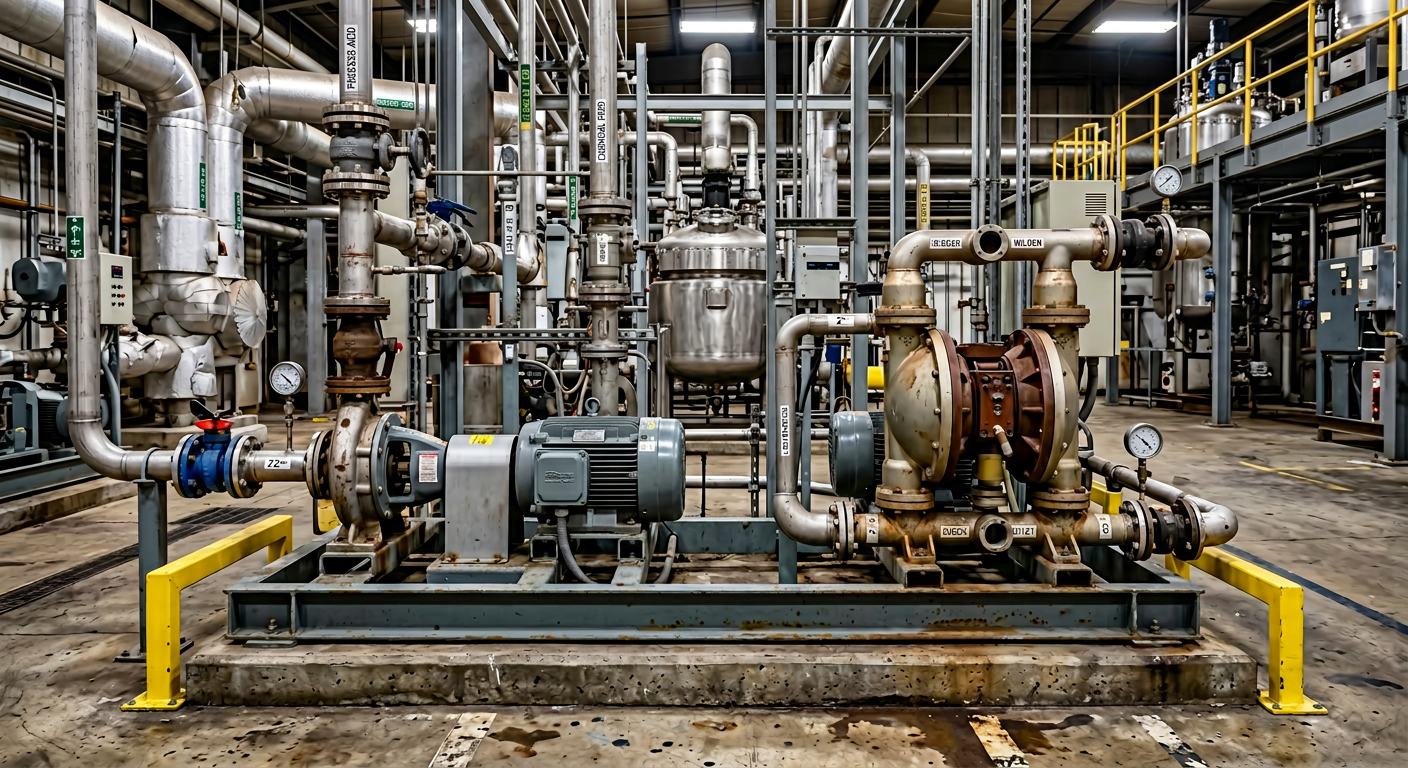
Thermoplastic vs. Metallic Pump Construction: Which Wins for Corrosive Chemical Environments?
Construction material is one of the most important choices in pump specification, yet it often receives less attention than flow, pressure, or purchase price. A pump may meet the required duty point and still fail early if its wetted materials are incompatible with the process fluid.
The choice between thermoplastic and metallic construction is not a simple contest. Fluid chemistry, concentration, temperature, pressure, solids content, and operating conditions all affect suitability. A careful comparison helps facilities select chemical-resistant pumps that balance performance, service life, maintenance, and cost.
Corrosion Resistance
Thermoplastic pump construction can provide strong resistance to many acids, caustics, and corrosive solutions. Materials such as polypropylene and PVDF do not rust, but compatibility varies by resin, chemical concentration, and temperature. Certain solvents and oxidizing agents can weaken or swell some plastics.
Metallic pumps offer a broad range of material options, including cast iron, stainless steel, and higher alloy constructions. Stainless steel performs well in many process applications, but it is not immune to pitting, crevice corrosion, or chloride attack. The correct pump material selection requires a review of every wetted component, including seals, gaskets, shafts, and impellers.
Weight, Footprint, and Installation
Thermoplastic pumps are generally lighter than comparable metallic units. Lower weight can simplify handling, mounting, and replacement. It may also reduce structural demands in compact skids or elevated installations.
Metallic construction can support higher mechanical loads and demanding pressure or temperature conditions, depending on the pump design. Weight may require more lifting and alignment planning. Footprint depends more on pump type and duty than material alone, so dimensional drawings should guide system integration.
Upfront Cost vs. Lifecycle Cost
Purchase price provides only part of the cost picture. A lower-priced pump can become expensive if corrosion causes frequent repairs, leaks, or replacement. A more costly alloy pump may provide better value when pressure, temperature, or mechanical demands exceed thermoplastic limits.
Thermoplastics can reduce lifecycle cost when they are compatible with the fluid and operating range. Metals can do the same when strength, heat resistance, or repairability extends service life. Industrial equipment procurement should compare expected life, energy use, maintenance labour, spare parts, and downtime rather than unit price alone. This approach also helps avoid common pump specification and budgeting mistakes.
Maintenance and Serviceability
Metallic pumps are often familiar to maintenance teams and may allow repair of individual components. However, specialized alloys can increase part cost and lead time. Corroded fasteners or internal surfaces can also complicate disassembly.
Thermoplastic components are easier to handle, but damaged casings may require replacement rather than repair. Availability varies by manufacturer and model for both construction types. Before selecting an industrial pump for sale, confirm parts access, service procedures, warranty terms, and local technical support. These factors reduce downtime risk when maintenance becomes necessary.
Which Applications Favour Which Material?
Thermoplastic construction often suits compatible acid transfer, caustic handling, chemical dosing support, plating solutions, and other corrosive services within the material limits. Metallic construction often suits higher temperature, higher pressure, abrasive, sanitary, or mechanically demanding applications when the selected alloy matches the fluid.
Mixed chemistry requires extra care. Trace contaminants, cleaning solutions, temperature changes, and solids can alter compatibility. The best industrial pump suppliers review the full process rather than recommending a material from the chemical name alone.
Decision Summary
| Factor | Thermoplastic construction | Metallic construction |
|---|---|---|
| Corrosion resistance | Strong for many compatible acids and caustics | Varies widely by metal or alloy |
| Temperature and pressure | Often more limited | Often supports more demanding conditions |
| Weight | Generally lighter | Generally heavier |
| Repair options | Some damaged parts require replacement | Individual components may be repairable |
| Best fit | Compatible corrosive service within material limits | Heat, pressure, abrasion, or mechanical demand |
Choosing Construction for the Complete Process
Neither material wins in every corrosive chemical environment. The right choice matches the complete fluid profile and operating range while accounting for service life, maintenance, and support.
The broader industrial pump supplier evaluation framework provides additional criteria for comparing equipment and supplier capabilities. Vissers Sales Corp can help facilities assess industrial pump solutions based on application requirements and available product options. Request a Quote to discuss the process conditions and equipment needs.