
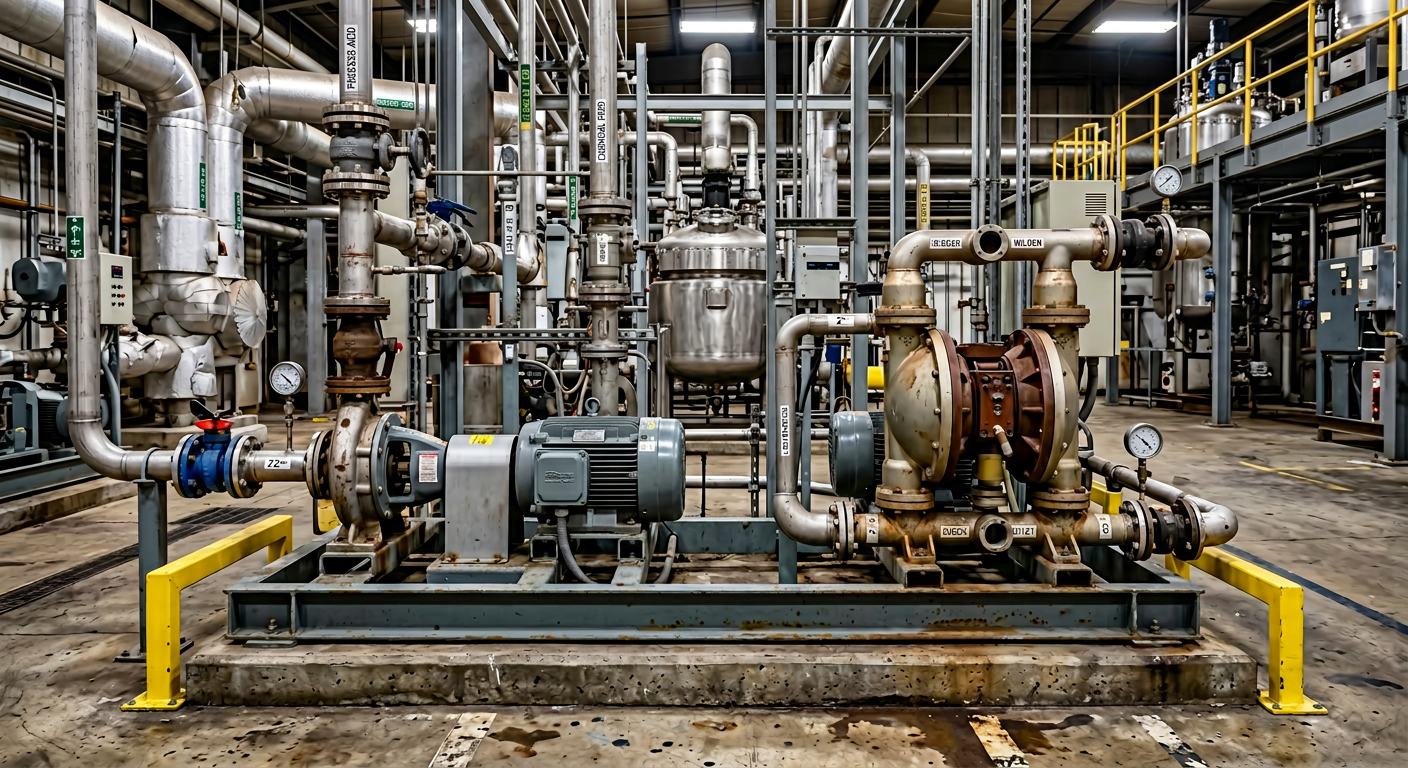
Magnetic Drive Pumps vs. Electric Diaphragm Pumps
Industrial facilities often handle corrosive, hazardous, or high-value fluids, where leak prevention and process control are critical. Selecting between mag drive pumps and electric diaphragm pumps affects safety, uptime, and operating costs.
Each technology serves a specific role in fluid handling systems. Understanding how fluid properties, pressure requirements, and maintenance expectations interact with pump design helps engineering teams make sound decisions.
How Each Pump Technology Works
Magnetic drive pumps use a sealless design. A magnetic coupling transfers torque from the motor to the impeller without a mechanical shaft seal. The pump casing remains fully enclosed. This design reduces external leak paths.
Key features:
- Centrifugal operating principle
- Magnetic coupling instead of a mechanical seal
- Continuous flow output
- Typically used for clean, low-to-moderate viscosity fluids.
Electric diaphragm pumps operate using a reciprocating diaphragm driven by an electric motor. The diaphragm moves back and forth, creating suction and discharge cycles.
Key features:
- Positive displacement design
- Pulsating flow
- Strong suction capability
- Suitable for higher viscosity or solids-laden fluids
The difference between centrifugal energy transfer and positive displacement directly affects performance under varying system conditions.
Leak Prevention and Environmental Safety
Leak control is often the primary reason businesses consider mag drive pumps. The sealless configuration eliminates mechanical seal failure as a common source of leaks. This design helps contain aggressive chemicals and reduces fugitive emissions.
Electric diaphragm pumps also provide controlled containment. The diaphragm acts as a barrier between the drive mechanism and the process fluid. However, diaphragm wear remains a maintenance factor over time.
From an environmental and safety perspective:
- Magnetic drive pumps reduce external leakage risk
- Diaphragm pumps provide strong chemical isolation
- Both technologies support regulatory compliance when properly selected
In highly corrosive services, material selection is critical regardless of pump type.
Flow Characteristics and Process Control
Magnetic drive pumps deliver smooth, continuous flow. As centrifugal pumps, their output varies with system head and operating conditions. Flow control often requires valves or variable speed drives.
Electric diaphragm pumps deliver a fixed volume per stroke. This positive displacement action allows:
- Precise dosing
- Stable flow against pressure changes
- Self-priming capability
However, pulsation may require dampeners for sensitive processes.
Facilities requiring steady circulation often favour sealless centrifugal units. Applications requiring measured transfer volumes or higher discharge pressures often align with electric diaphragm pumps.
Maintenance and Lifecycle Costs
Mechanical seal failures represent a common maintenance expense in traditional centrifugal pumps. Mag-drive pumps eliminate this failure point. Fewer wear components can lower long-term maintenance requirements when fluids remain clean.
Electric diaphragm pumps require periodic inspection and diaphragm replacement. Over time, fatigue or chemical attack can degrade the diaphragm.
Lifecycle cost considerations include:
- Downtime frequency
- Spare part availability
- Energy efficiency
- Operating hours
Mag-drive centrifugal pumps typically operate efficiently in continuous duty cycles. Diaphragm pumps handle intermittent or variable dosing tasks effectively.
Fluid Compatibility and Application Suitability
Fluid characteristics strongly influence pump selection.
Magnetic drive pumps are commonly used for:
- Acids and corrosive chemicals
- Solvents
- Clean liquids
- Low-to-moderate viscosity fluids
Electric diaphragm pumps often handle:
- Higher viscosity fluids
- Slurries or light solids
- Applications requiring suction lift
- Chemical injection or transfer
Temperature limits, chemical compatibility, and system pressure must be evaluated carefully. Material selection, such as polypropylene, PVDF, or stainless steel, often determines long-term reliability.
When to Choose Each Technology
Magnetic drive pumps suit operations where:
- Leak prevention is critical
- Continuous flow is required
- Fluids are relatively clean
- Seal maintenance must be minimized
Electric diaphragm pumps suit operations where:
- Accurate dosing is necessary
- Higher pressures are required
- Self-priming capability is beneficial
- Fluids contain light solids
The correct decision depends on system design, not simply pump preference.
Also Read:
Evaluating the Common Concerns About Mag Drive Pumps
Mag Drive Pumps in High-Temperature Applications: How They Perform
The Importance of Material Selection in Mag Drive Pumps for Corrosive Fluids
Engineering Considerations Before Final Selection
Magnetic drive pumps and electric diaphragm pumps each serve defined industrial roles. Understanding their operating principles, maintenance requirements, and fluid compatibility helps prevent costly misapplication. Careful evaluation of system requirements leads to stronger performance and improved lifecycle value.
Before selecting magnetic drive pumps or electric diaphragm pumps, engineering teams should review:
- Required flow rate and pressure
- Fluid viscosity and chemical composition
- Temperature range
- Suction conditions
- Duty cycle (continuous vs. intermittent)
- Energy consumption expectations
System curves and pump performance curves must align. Oversizing or undersizing increases energy use and wear. Selecting the correct pump technology supports safe containment, predictable flow, and stable long-term operation. Contact Vissers Sales Corp. to choose the right pump technology for industrial applications.