
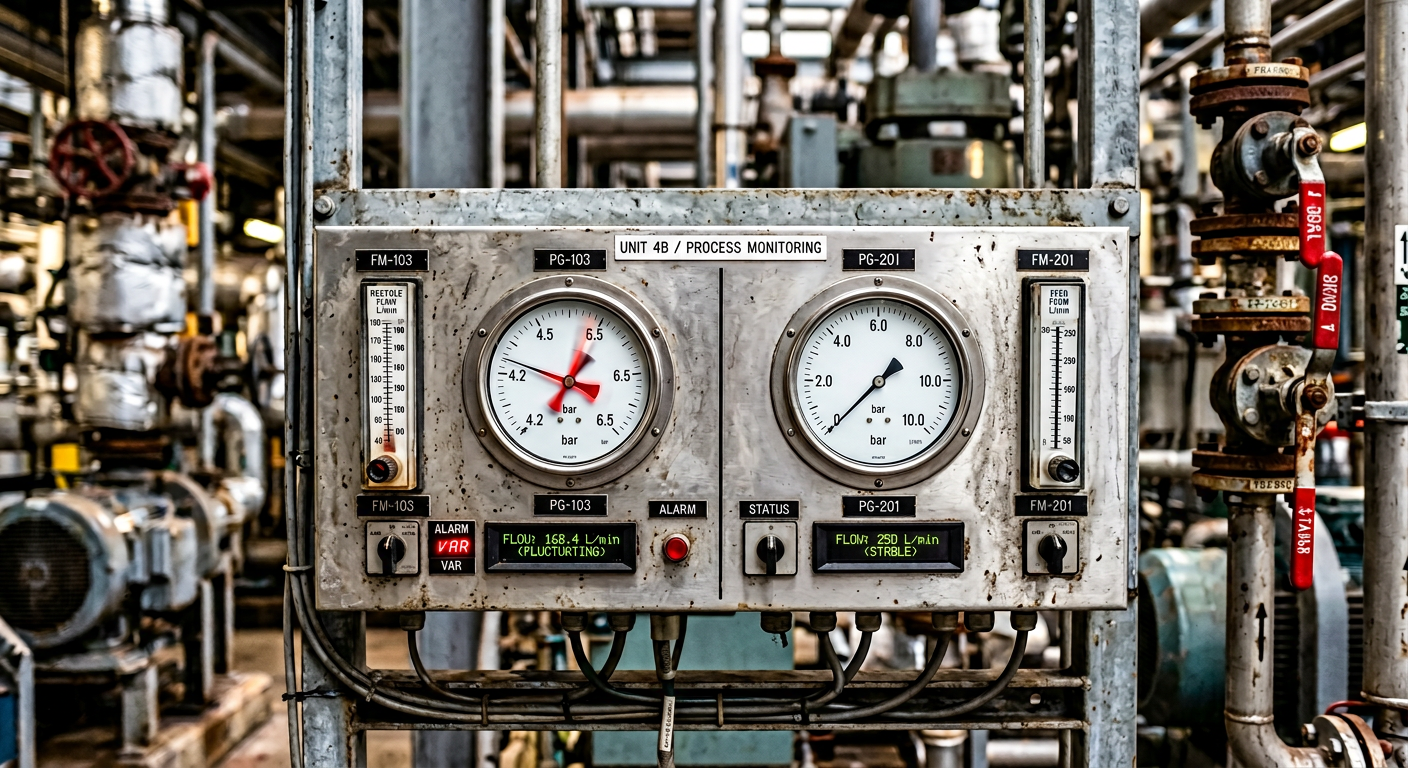
Why Stable Flow Matters More Than People Think
Stable flow does not get much attention when everything is running. People notice pressure when it drops. They notice dosing when results drift. They notice vibration when a line starts shaking. But flow sits underneath all of it. It is the quiet foundation that makes the rest of the system behave.
When flow is unstable, the problems spread farther than most teams expect. Pressure becomes inconsistent. Energy use climbs. Dosing accuracy suffers. Mixing becomes less predictable. Product quality can drift. Operators lose confidence because the system no longer behaves the same way twice. That is why stable flow matters so much. And it can be an operational advantage.
Stable Flow Makes Pressure Control Possible
A lot of pressure complaints are really flow problems in disguise.
When booster flow is unstable, pressure control starts chasing a moving target. The system speeds up, slows down, overshoots, and then tries to recover. What operators experience is pressure that feels erratic. What the system is actually struggling with is inconsistent demand or an unstable flow path.
This is one reason booster systems can seem fine one minute and frustrating the next. A clogged strainer, a poorly tuned VFD, an oversized pump, or a valve position that changed slightly can all disrupt flow enough to make pressure look like the problem.
Unstable Flow Makes Dosing Look Worse Than It Is
Chemical dosing depends on consistency. Even when a metering pump is technically delivering the right amount per stroke, unstable flow in the host system can make the result look wrong.
If the process flow changes abruptly or the injection point sees uneven velocity, chemical concentration swings. Sensors respond to those swings. Operators react to the sensors. Then the pump gets blamed.
This is one of the most frustrating parts of dosing systems. The pump may be doing exactly what it was told to do, but the process is not giving that dose a fair chance to mix and behave consistently. Unstable flow can create the impression of bad dosing when the real issue is poor hydraulic conditions.
Vibration and Pulsation are Often Flow Issues First
When lines chatter, gauges flutter, or tubing starts to shake, most teams focus on the symptoms. They add support. They replace fittings. They tighten clamps. Sometimes that helps. But if the underlying flow is unstable, the shaking usually comes back.
Flow instability creates pressure waves. Pressure waves create vibration. In metering systems, pulsation makes this worse because the fluid already moves in pulses. If the line is poorly supported, the back pressure is inconsistent, or the downstream conditions are unstable, the whole system starts to behave like it is arguing with itself.
That is why stable flow and pulsation control belong in the same conversation. If this sounds familiar, please read this article on the subject that we’ve previously published: Quiet the shake: smoothing out lines with pulsation control
Unstable Flow Quietly Wastes Energy
One of the most overlooked costs of unstable flow is energy. When the flow is inconsistent, the controls try to compensate. The VFD ramps up, then backs off. The system overcorrects, then corrects the correction. In some cases, operators add throttling to settle things down, which creates more resistance and more wasted power. The process still runs, so no one sees it as a crisis. But the meter does.
This is one of those hidden losses that builds over time. It rarely looks dramatic on one shift. Over months, though, unstable flow often becomes a quiet tax on the entire system. You spend more to get less consistency.
Further reading: The hidden money leak in your pump room
It Also Affects Operator Confidence
This part matters more than many people realize. When a system behaves differently from one day to the next, operators stop trusting what they see. They hesitate before making adjustments. They rely more on workarounds. They spend more time checking things manually because they no longer believe the process will respond predictably.
That loss of confidence is expensive. Both in time and in decision quality. Stable systems help people operate well because the relationship between cause and effect stays clear. Unstable systems make good operators feel like they are constantly reacting to surprises. There is a human side to fluid handling, and stable flow supports it.
The Problem is Often Upstream of the Symptom
One reason unstable flow causes so much trouble is that it rarely announces itself directly. It shows up as pressure drift, poor dosing, vibration, inconsistent mixing, or quality variation. Teams chase each symptom separately when the real issue is shared.
That is why the better question is not “What is wrong with the pressure?” or “Why is dosing off?” It is “Is the flow through this system actually stable?”
Once you ask that, you start checking the right things:
- Pump sizing
- Suction conditions
- Strainer loading
- Control tuning
- Valve position
- Line routing
- Pulsation control
- Process demand changes
Further reading: Right-sizing your pump for maximum efficiency and performance
Stable flow is what makes pressure control easier, dosing more accurate, lines quieter, energy bills lower, and operators more confident. When the flow is unstable, the whole system feels harder to run. When the flow is steady, everything downstream gets easier. That is why flow deserves more attention than it usually gets.
If a system feels noisy, wasteful, or unpredictable, start by asking whether the flow is truly stable. In many cases, that is where the real answer begins.
We at Vissers Sales Corp specialize in optimizing pump systems to ensure maximum reliability and minimum operating cost. Reach out to us in Canada toll-free on 1-800-367-4180 to get a conversation started.