Why NPSH Calculations Matter When Selecting Industrial Centrifugal Pumps
Low suction pressure is one of the most overlooked causes of pump failure in industrial systems. Cavitation, noise, vibration, and premature wear often trace back to incorrect suction design rather than pump quality. This is where net positive suction head (NPSH) becomes critical.
Understanding how NPSH calculations affect Canadian industrial pump performance helps prevent costly downtime and protects long-term system reliability.
People Also Ask
What happens if the available NPSH is lower than the required NPSH?
When the available NPSH falls below the required NPSH, vapour bubbles form inside the pump. These bubbles collapse as pressure increases, causing cavitation. This results in noise, vibration, reduced performance, and damage to internal components.
How can NPSH be improved in a pump system?
NPSH can be improved by reducing suction line losses, increasing pipe diameter, lowering pump elevation, and maintaining adequate liquid levels. Lowering fluid temperature also helps reduce vapour pressure and improve suction conditions.
What Net Positive Suction Head (NPSH) Means in Pump Selection
Net positive suction head (NPSH) defines the pressure available at the pump suction compared to the liquid’s vapour pressure.
There are two key terms:
- NPSH Available (NPSHa): The pressure provided by the system
- NPSH Required (NPSHr): The minimum pressure needed by the pump to operate without cavitation
For stable operation, NPSHa must always exceed NPSHr.
How NPSH Influences Centrifugal Pump Performance
Centrifugal pumps rely on consistent fluid flow into the impeller. When the suction pressure drops to the required levels, vapour bubbles form and collapse inside the pump.
This leads to:
- Cavitation damage on impellers
- Increased vibration and noise
- Reduced flow and efficiency
- Premature seal and bearing wear
Even well-sized Canadian industrial pumps can fail early if NPSH conditions are not properly calculated.
Key Factors Engineers Must Evaluate When Calculating NPSH
Several system elements influence the NPSH available:
- Static Head: Height of liquid above the pump suction
- Friction Losses: Resistance in suction piping, valves, and fittings
- Fluid Temperature: Higher temperatures increase vapour pressure
- Atmospheric Pressure: Varies with elevation and location
- Pipe Diameter and Length: Smaller or longer pipes increase losses
Accurate calculation requires considering all these variables together rather than in isolation.
Why NPSH Margins Matter in Industrial Pump Selection
Matching NPSHa to NPSHr is not enough. A safety margin is required to account for real-world fluctuations. Typical practice includes maintaining an NPSH margin above the pump’s required value to handle:
- Changes in fluid temperature
- Variations in system demand
- Wear in piping and valves over time
Operating too close to the NPSHr threshold increases the risk of intermittent cavitation.
Common System Design Issues That Reduce Available NPSH
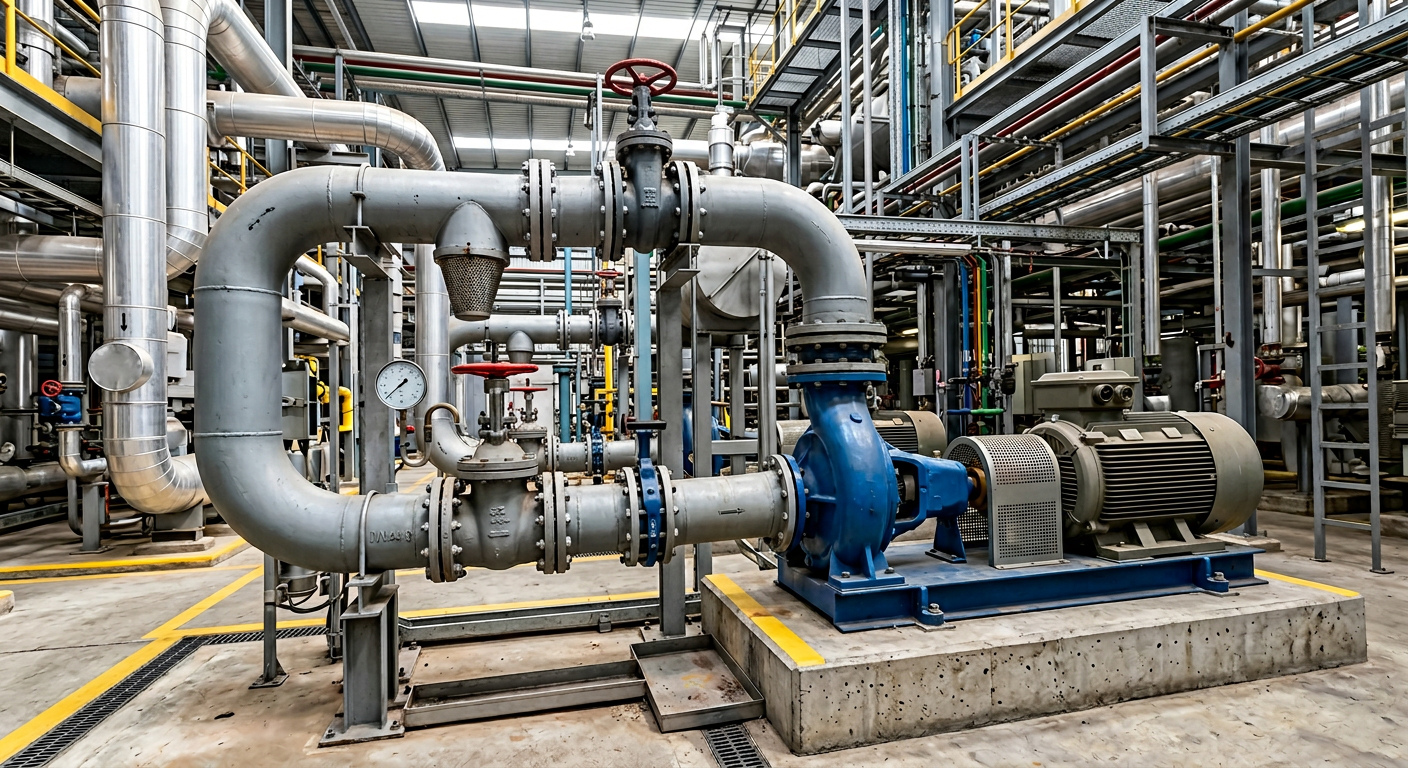
Many system layouts unintentionally reduce NPSHa. Common issues include:
- Long suction lines with multiple bends
- Undersized suction piping
- Excessive use of valves and fittings
- Elevating pumps above the liquid source
- Poor tank design resulting in air entrainment
Each of these factors increases friction loss or reduces suction pressure, limiting the performance of industrial pump systems.
Why NPSH Calculations Should Be Part of Every Pump Specification
Pump selection often focuses on flow rate and total dynamic head. However, ignoring suction conditions can lead to incorrect equipment choices.
Including NPSH calculations in the specification stage helps:
- Align pump selection with real system conditions
- Reduce the risk of operational issues after installation
- Improve long-term system efficiency
- Avoid costly retrofits or replacements
This approach ensures the centrifugal pump performs as intended within the system.
Also Read:
Where to Buy Industrial Pumps in Canada Without Costly Mistakes
A Regional Guide About Where to Buy Industrial Pumps in Canada
How Static Mixers Enhance Precision and Consistency in Industrial Process Control
Designing Centrifugal Pump Systems That Avoid Cavitation
Suction pressure calculations play a central role in selecting and operating industrial centrifugal pumps. Ignoring suction conditions can lead to cavitation, reduced efficiency, and premature equipment failure
Effective pump system design requires balancing NPSHa with NPSHr while maintaining a sufficient safety margin. When suction conditions are properly managed:
- Cavitation risks are minimized
- Equipment lifespan improves
- System performance remains consistent
- Maintenance requirements decrease
A well-designed system supports stable operation across varying conditions without placing unnecessary stress on the pump.
Careful evaluation of system design, fluid properties, and operating conditions is essential. It helps ensure that the available NPSH consistently exceeds pump requirements by an appropriate margin.
For guidance on selecting industrial pumps in Ontario, contact Vissers Sales Corp for systems that align with real operating conditions.