The Real Cost of Temporary Fixes in Industrial Pump Systems
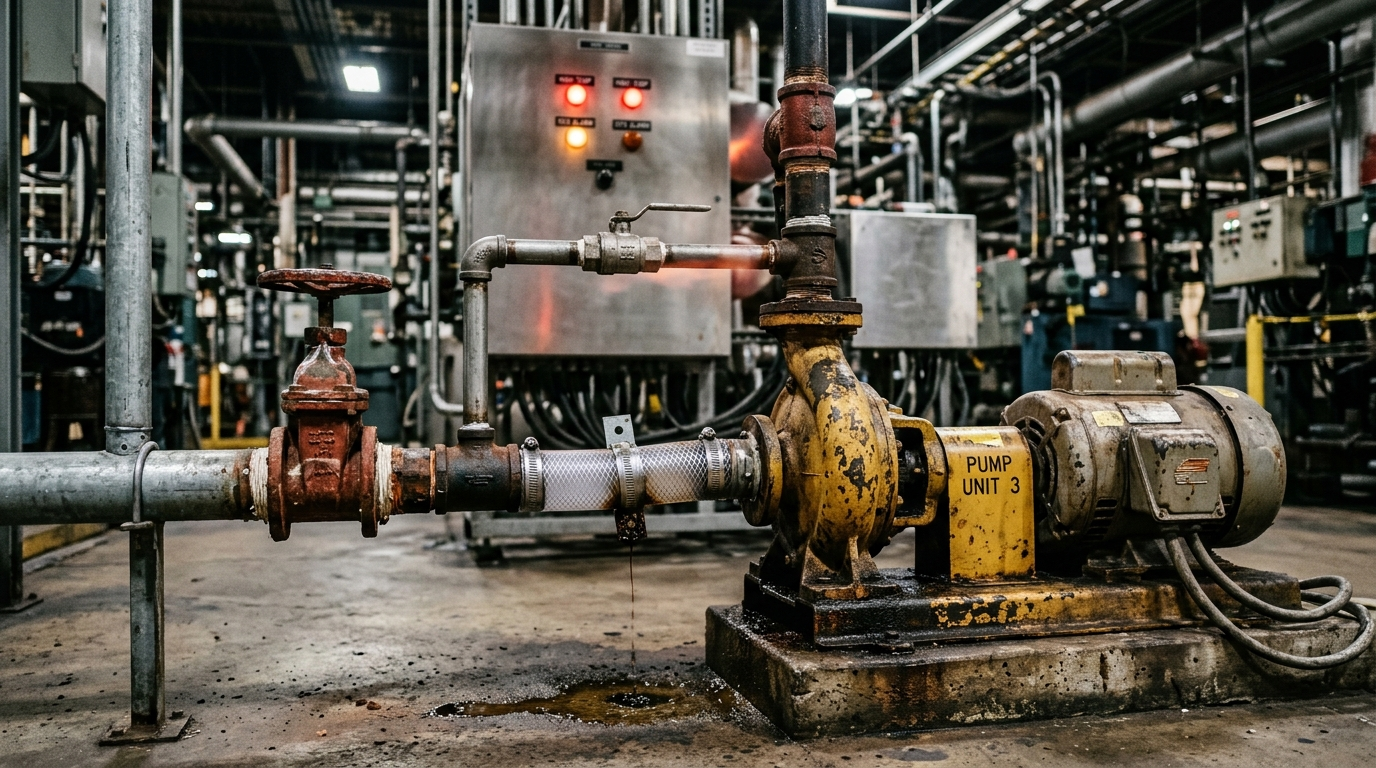
Temporary fixes have a way of becoming part of the landscape. A valve gets throttled “just for now”. A section of tubing gets swapped with whatever was on hand. A bypass gets added to keep production moving. An alarm starts chirping often enough that people stop reacting to it. The plan is always the same: we’ll deal with it at the next shutdown.
Sometimes that next shutdown comes. Often it does not.
And that is where the real cost starts to build.
Temporary fixes are rarely expensive on day one. That is why they are attractive. They solve a problem quickly, they keep people moving, and they create a feeling of control. But over time, those half-measures harden into permanent inefficiency. They waste energy. They add wear. They confuse operators. They make maintenance harder. And they slowly turn a stable system into one that always feels slightly off.
This is a management problem disguised as a maintenance one.
The Throttled Valve That Quietly Burns Money
One of the most common examples is the valve that gets left half-closed to calm down a system. Maybe the pump was oversized. Maybe the controls were unstable. Maybe the process changed. Whatever the original reason, throttling often becomes the shortcut that survives. It works in the sense that the flow stops causing trouble. But it also means the system is wasting energy every hour it runs. The pump is still producing more than the process needs, and the valve is simply turning that excess into friction and heat.
That is not a fix.
Over time, throttled valves also make it harder to see the real issue. The plant adapts to the workaround. People stop asking why the valve sits there. The system now has a permanent penalty built into it.
Temporary Tubing and Fittings Create Permanent Uncertainty
Another familiar pattern is the “we’ll replace it properly later” tubing run. It may have started during a breakdown, when the right material was not on hand. So a line was patched with whatever fit. The fitting is not ideal, the routing is messy, and the tubing may not even be the best match for the chemical or pressure involved. But the system comes back online, and the urgency passes.
Months later, that temporary line is still there.
The problem is that improvised tubing and fittings create uncertainty. They are harder to inspect, harder to label, and harder to trust. They introduce new leak points and new safety risks. In chemical systems, they can also create compatibility issues that do not show up immediately but eventually lead to swelling, brittleness, or failure.
The longer a temporary line stays in service, the more likely it becomes part of the problem list no one can quite solve.
Bypasses That Never Go Away
Bypasses are another classic temporary fix. They are usually added for a good reason. Maybe a component failed. Maybe startup required more flexibility. Maybe operators needed a way to keep the system moving. But when a bypass remains in place long after the original need has passed, it changes the system in ways that are easy to underestimate.
A bypass can reduce pressure where you need it most. It can distort readings. It can make troubleshooting more confusing because the flow is no longer following the path everyone assumes. It can also encourage a culture where process discipline slips, because there is always an unofficial route around the intended design.
A bypass that never goes away is an alternate system that comes with its own failures, its own inefficiencies, and its own blind spots.
Further reading: No more 2 a.m. call-outs: make your pump system reliable
“We’ll deal with it next shutdown” is often where momentum dies. It sounds responsible. It implies planning. It suggests the team knows the issue matters and intends to address it properly. But in practice, “next shutdown” is often a holding area for problems that slowly become normal.
If the issue is not documented clearly, assigned to someone, and tied to a work order or outage plan, it does not really exist as future work. Temporary fixes are sometimes necessary. But they should never be invisible. If a workaround is in place today, ask one simple question: Is this still temporary, or have we quietly accepted it as normal? That question alone can save more money than most people expect.
Vissers Sales Corp specializes in optimizing pump systems to ensure maximum reliability and minimum operating cost. Reach out to us in Canada toll-free on 1-800-367-4180 to get a conversation started.