
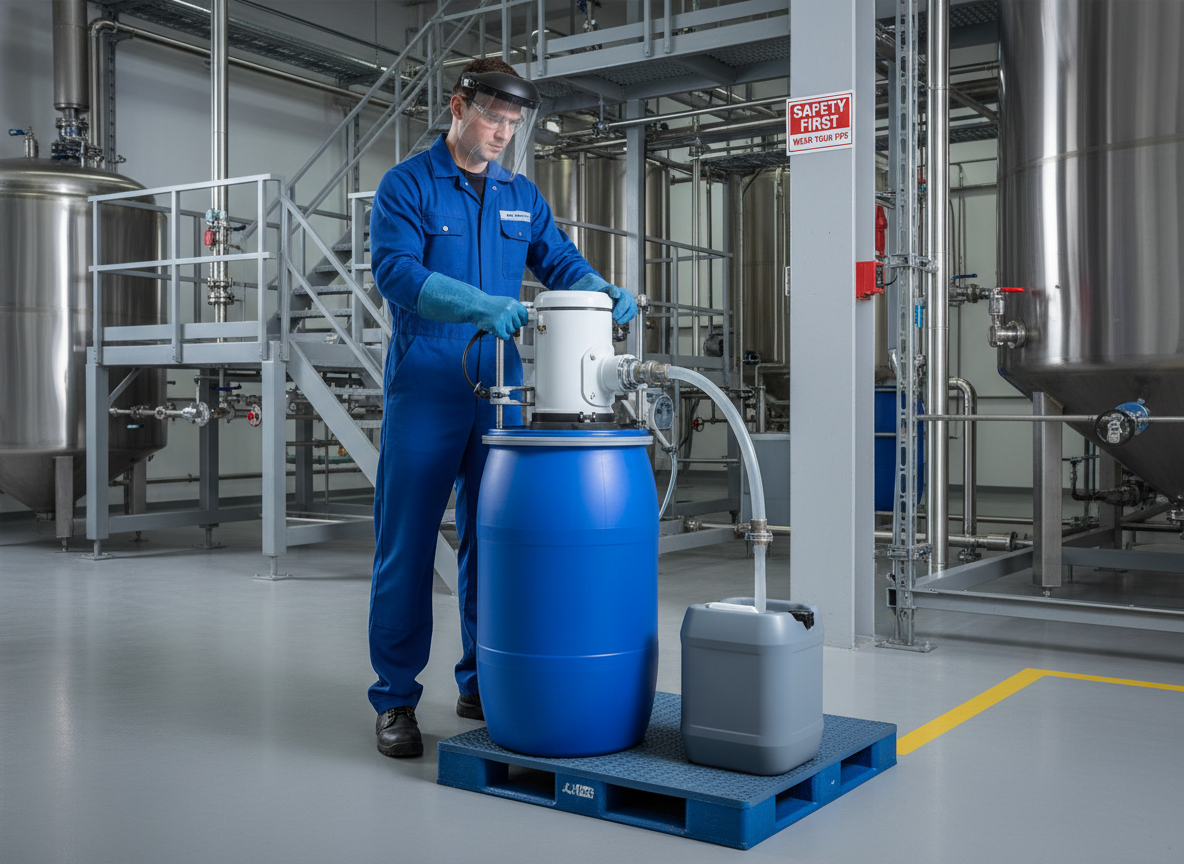
Top Drum Pump Safety Tips Every Facility Should Know
Handling liquids from drums and totes is a routine task in many industrial facilities. Drum pumps, also known as barrel pumps, play a critical role in efficiently transferring chemicals, oils, and other process fluids. While these pumps simplify fluid handling, improper use or poor safety practices can introduce avoidable risks.
Understanding drum pump safety is not about adding complexity. It is about creating consistent habits that protect personnel, equipment, and operations.
People Also Ask (PAAs)
1. What are the main safety risks when using drum pumps?
The main safety risks when using drum pumps include chemical exposure, uncontrolled flow spills, improper mounting, and material incompatibility between the pump and the fluid. These risks are reduced through proper pump selection, stable installation, regular inspection, and controlled transfer procedures.
2. How can facilities improve drum pump safety during daily operations?
Facilities improve drum pump safety by matching pump materials to the fluid, securing the pump during operation, using flow-control methods, regularly inspecting components, and storing pumps correctly between uses. Consistent procedures help prevent spills and equipment damage.
Why Drum Pump Safety Deserves Attention
Drum pumps are often used daily and across multiple departments. This frequent use can lead to complacency. Small oversights, such as improper mounting or incompatible materials, can result in spills, exposure incidents, or equipment damage.
Safety-focused handling reduces downtime, supports compliance, and maintains process continuity.
Match the Drum Pump to the Fluid Being Transferred
Material compatibility sits at the core of safe drum pump operation. Different fluids interact differently with pump components. Corrosive chemicals, viscous liquids, and temperature-sensitive fluids require specific shaft, seal, and housing materials.
Key considerations include:
- Chemical compatibility between the fluid and wetted parts
- Fluid temperature and viscosity
- Drum size and configuration
Using a drum pump designed for the specific application reduces seal failure, leakage, and unexpected wear.
Secure the Pump Before Operation
Stability matters during fluid transfer. A loosely mounted chemical drum pump can shift during operation. This increases the risk of splashing, hose disconnection, or shaft misalignment.
Safety best practices include:
- Ensuring the pump tube is fully seated in the drum
- Locking or clamping the pump in place, where applicable
- Confirming discharge hoses are properly supported
A stable setup creates a predictable flow and minimizes operator intervention during transfer.
Control Flow to Prevent Spills and Overfilling
Uncontrolled discharge is a common source of safety incidents. Drum pumps move fluid quickly and without flow control; receiving containers can overflow before the transfer stops.
Effective control methods include:
- Using valves or flow regulators at the discharge point
- Monitoring fill levels during transfer
- Matching pump output to container size
Controlled flow protects floors, equipment, and nearby work areas from unnecessary exposure.
Use Appropriate Personal Protective Equipment
Even with the right drum pump, direct exposure remains a risk. Facilities should align personal protective equipment with the fluid being handled. This may include gloves, face shields, chemical-resistant clothing, or eye protection.
Consistent PPE use supports:
- Reduced risk of skin or eye contact
- Faster response if a minor leak occurs
- Safer cleanup if a spill develops
Safety protocols work best when equipment and protective measures align.
Inspect Drum Pumps Regularly
Routine inspection prevents small issues from becoming serious failures. Drum pumps experience wear from repeated insertion, removal, and operation. Seals, shafts, and couplings deserve regular attention.
Inspection practices should focus on:
- Checking seals for wear or cracking
- Verifying smooth motor operation
- Inspecting hoses and connections for degradation
Addressing wear early supports longer service life and safer operation.
Also Read:
What to Look for in a Reliable Industrial Pump Supplier
How Drum Pumps Simplify Fluid Management Across Industries
Chemical Pumps Costing You? Choose The Right Materials To Save
Build Safety Into Everyday Drum Pump Use
Drum pump safety is not a one-time checklist. It is a set of repeatable actions that protect people and processes. When equipment selection, setup, inspection, and operation follow consistent standards, fluid transfer becomes predictable and controlled.
Facilities that treat drum pump safety as part of daily operations see fewer disruptions and stronger reliability. By focusing on compatibility, stability, flow control, inspection, and storage, facilities reduce risk without slowing productivity.
For applications that require reliable drum and tote pumping solutions, contact Vissers Sales Corp. for chemical-resistant barrel pumps designed for safe, consistent operation.