Types of industrial filters
Industrial filters are crucial for maintaining a safe and healthy working environment in many industries. Whether it’s removing pollutants from the air, impurities from liquids, or particulates from gas streams, industrial filters play a vital role in protecting workers, equipment, and the environment.
But what exactly are industrial filters and how do they work? In this article, we’ll dive into the world of industrial filtration to explore three types of filters.
Industrial liquid filters
Liquid filters are used in industrial processes (such as water treatment, chemical processing, and food and beverage production) to remove impurities, contaminants, and solids from liquids in industrial processes. Liquid filtration technologies include sediment filters, activated carbon filters, reverse osmosis, microfiltration, and ultrafiltration, each designed to remove specific types of impurities from liquids.
Industrial air filters
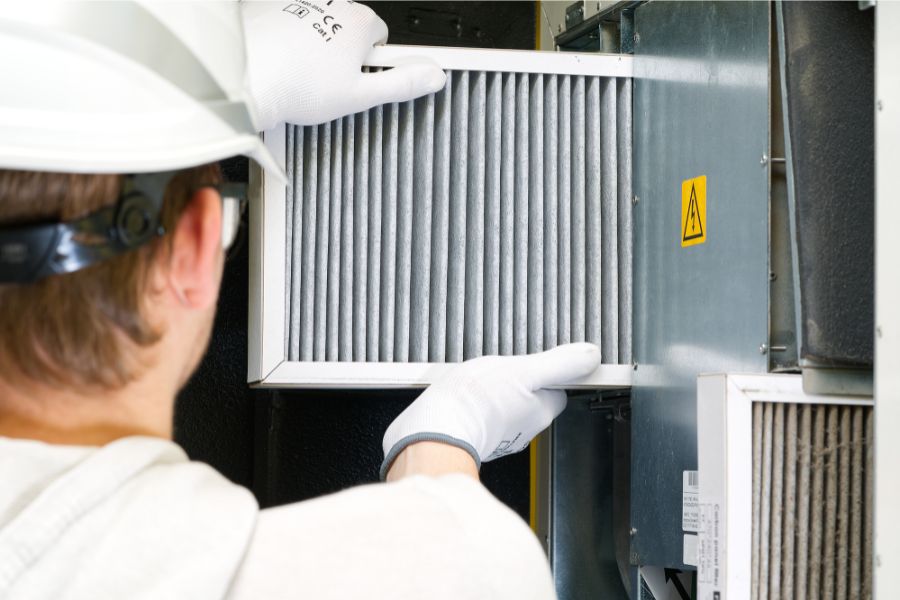
Industrial air filters are used to remove pollutants, particulates, and other contaminants from the air in industrial settings. The most common air filtration technologies include HEPA filters, activated carbon filters, electrostatic precipitators, and mechanical filters. Each of these technologies is designed to remove specific types of pollutants from the air and to improve overall air quality.
Gas, vapour and particulate filters
Gas, vapour, and particulate filters are types of filters used in industrial applications to remove solid particles, dust, and debris from the air and from gas streams. Common gas, vapor and particulate filtration technologies include mechanical filters, electrostatic precipitators, and bag filters.
Gas filters are specially designed to remove gases and contaminants from the air. These industrial filters typically use adsorption or chemical reactions to trap the gaseous pollutants.
Vapor filters remove volatile organic compounds (VOCs) and other volatile chemicals from the air. These industrial filters often use activated carbon or chemical sorbents to capture the vapours.
Particulate filters remove solid particles, dust, and debris from the air. These filters use physical barriers such as filter media, electrostatic precipitators, or cyclones to capture the particulates.
Ultimately, industrial filters play a crucial role in maintaining a safe and healthy work environment in a variety of industries. From air filtration to liquid filtration or gas/particulate filtration, there are a range of technologies available to remove pollutants, impurities, and particulates. By choosing the right filtration system for the specific application, industries can protect workers, equipment, and the environment, while improving the overall quality of the workplace.
Still stuck on which industrial filter you should be using? Give us a call on 1-800-367-4180 (toll-free) to find out more, or choose from our product range. As your specialist industrial filter supplier in Canada, we’re here to help you choose, install, maintain, and monitor a variety of equipment. And to answer questions about things you’ve previously tried gone wrong. So, contact us now!