How to Choose Canadian Industrial Pumps to Prevent Equipment Failure
Failures in liquid handling systems rarely begin with visible damage. Most issues originate from poor specification, incorrect material selection, or mismatched operating conditions. These factors directly influence performance, reliability, and maintenance outcomes in Canadian industrial pumps.
Understanding Canadian Industrial Pumps and Engineered Solutions
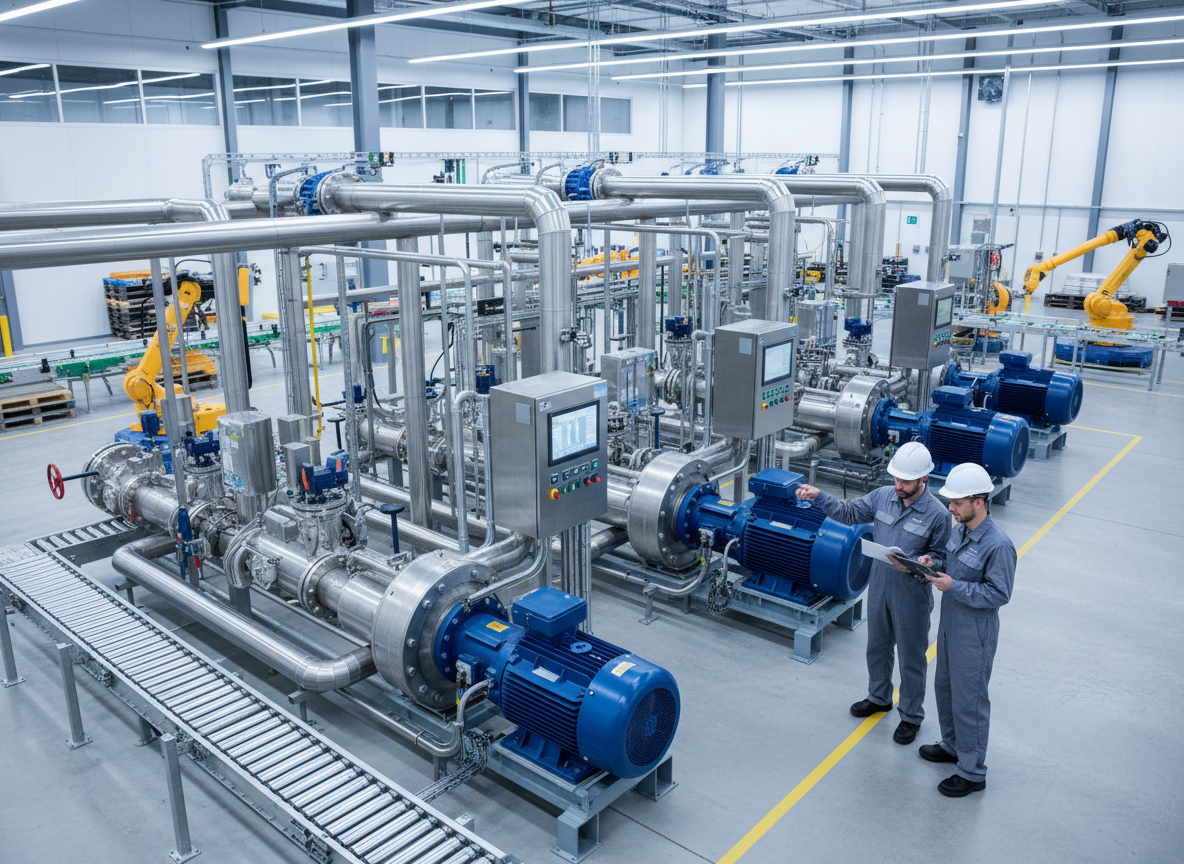
Canadian industrial pumps are no longer selected as standalone components. Modern procurement focuses on engineered solutions that consider the entire system. This includes suction conditions, piping layout, controls, and service access.
Core liquid handling equipment includes:
- Pumps and drivers
- Seal arrangements
- Piping geometry
- Valves and tanks
- Strainers and filtration
- Control systems
System performance depends on how these elements function together. A properly integrated system reduces the risk of hidden failures and improves operational stability.
People Also Ask
What causes industrial pump failure in liquid handling systems?
Industrial pump failure often results from incorrect specification, poor suction conditions, material incompatibility, or operating outside the intended performance range. These factors lead to cavitation, wear, and reduced efficiency.
How are Canadian industrial pumps selected for different applications?
Canadian industrial pumps are selected by evaluating system flow, pressure requirements, fluid properties, and operating conditions. Proper selection ensures compatibility with process demands and reduces long-term maintenance risks.
Why Proper Selection Prevents Downtime
Downtime often develops gradually through vibration, noise, and unstable flow. Early signs indicate an imbalance between system demand and pump capability. Canadian industrial pumps perform reliably when the selection aligns with real operating conditions.
Total Life Cycle Cost Considerations
The initial purchase price represents only a portion of the total cost. Energy consumption, maintenance labour, and spare parts drive long-term expenses.
For example:
- Continuous wastewater transfer requires stable operation across varying inflow
- Pumps operating away from their efficiency range increase wear
- Improper selection leads to recurring maintenance interventions
Accurate specification reduces long-term operational risk.
Managing Cavitation and Wear
Suction conditions must provide an adequate operating margin. When suction pressure approaches the minimum requirements, vapour formation can occur. This leads to:
- Impeller damage
- Flow instability
- Seal degradation
Operating near extreme performance limits also increases mechanical stress. Maintaining stable operating ranges improves reliability and reduces failure frequency.
Core Categories of Industrial Pump Systems
Industrial pump systems vary based on fluid characteristics and application requirements. Selecting the correct category is essential before evaluating specific configurations.
Centrifugal and Positive Displacement Pumps
Centrifugal pumps support high-flow applications with relatively low viscosity fluids. Common uses include:
- Cooling water circulation
- Raw water transfer
- Municipal water systems
Positive displacement pumps are suitable for:
- High-viscosity fluids
- Slurries and polymers
- Metered transfer applications
These pumps deliver consistent flow regardless of pressure variation.
Metering and Chemical Handling Pumps
Metering pumps provide controlled dosing in chemical applications. Common uses include:
- Chlorine injection
- Coagulant dosing
- Acid and caustic transfer
Material compatibility is critical in these systems. Wetted components must match fluid chemistry to prevent degradation and early failure.
Specifying Canadian Industrial Pumps for Complex Applications
Complex applications require detailed analysis beyond nominal flow and pressure values. Canadian industrial pumps should be specified using actual system data rather than assumed conditions.
System Curve and Operating Range Analysis
System behaviour varies depending on configuration:
- Closed-loop systems are dominated by friction losses
- Open systems depend on static head and fluid level variation
- Parallel pump setups increase flow
- Series configurations increase pressure
Stable control logic is required to prevent uneven load sharing. Proper motor sizing maintains a safety margin under variable conditions.
Material and Fluid Compatibility
Material selection must reflect operating conditions such as:
- Fluid composition
- Temperature range
- Pressure limits
- Abrasion or corrosion potential
Incorrect material selection leads to:
- Swelling or cracking of elastomers
- Accelerated wear of components
- Structural failure under pressure
Accurate specification ensures durability across the full operating cycle.
Maintenance and Support Considerations
Long-term performance depends on maintenance planning and service availability. Industrial facilities operating Canadian industrial pumps benefit from structured support systems.
Emergency Response and Service Access
Critical systems require rapid response capabilities. Delays in service can result in:
- Production loss
- System overflow
- Equipment damage
Regional service access reduces downtime by enabling faster intervention.
Ensuring Component Compatibility
System components must function together without conflict. Key considerations include:
- Alignment between pump curves and control systems
- Integration of variable speed drives
- Protection against minimum flow conditions
Standardized spare parts and compatibility checks reduce operational risk.
Supporting Reliable Industrial Pump Systems
Reliable performance depends on coordinated system design, accurate specification, and consistent maintenance practices. Industrial pump systems operate effectively when each component supports overall system balance.
Key outcomes of proper selection include:
- Stable flow and pressure
- Reduced energy consumption
- Lower maintenance frequency
- Extended equipment life
Also Read:
The Real Cost of Temporary Fixes in Industrial Pump Systems
How Custom Industrial Pumps Reduce Downtime for Chemical Plants
5 Mistakes Manufacturers Make When Choosing the Best Industrial Pump Suppliers in Canada
Final Considerations for Procurement
Procurement decisions should be based on a complete system evaluation rather than isolated equipment selection. Canadian industrial pumps deliver consistent performance when engineering, service planning, and operational requirements remain aligned.
A structured procurement process includes:
- Duty and system analysis
- Fluid and material compatibility review
- Control and operating strategy evaluation
- Service and maintenance planning
For industrial facilities reviewing liquid handling requirements, evaluating system conditions before installation helps prevent avoidable failures. Contact Vissers Sales Corp. for access to industrial pump systems that meet application requirements and deliver long-term operational performance.