
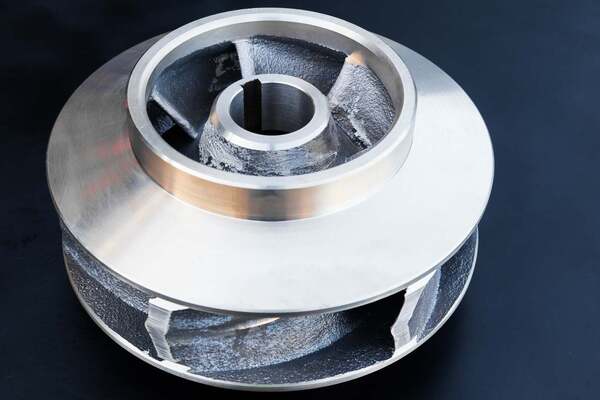
Exploring Impeller Types: Open, Semi-Open, Closed, Vortex, Cutter or Screw
What Are the Main Types of Impellers?
Impeller types for centrifugal pumps are classified primarily by how enclosed their vanes are: open impellers (vanes fully exposed), semi-open impellers (vanes open on one side, supported by a back shroud), and closed impellers (vanes fully enclosed for maximum strength). Specialized designs — vortex, cutter, and screw impellers — are built specifically to handle solids, debris, or thick fluids that standard designs would clog on.
Centrifugal pumps are vital in numerous industries, ranging from water management and oil refining to pharmaceutical production and power generation. The impeller lies at the heart of these powerful machines, a critical component that transfers the motor’s power to the fluid. The pump’s impeller has rotating vanes that come off an open inlet known as the eye; these rotating vanes create a centrifugal force as they turn that moves the liquid from the casing to the discharge points (find out more about how an impeller works here).
Choosing the right impeller type directly affects pump efficiency, solids handling capability, and maintenance frequency — which is why understanding the differences between impeller types matters as much as choosing the pump itself. In this article, we’ll break down the main types of impeller used in centrifugal pumps.
1. Open Impeller
Open impellers are designed with vanes completely open on both sides, offering maximum passage for the fluid. These impellers are preferred for pumps that handle highly contaminated or viscous fluids and those containing solids. Open impellers are more susceptible to wear and damage, but they provide easier access for maintenance and cleaning. They don’t have support on each side, so they tend to be used in smaller, inexpensive pumps that don’t operate under significant strain. They are often used in mining, dredging, slurry pumping, and other industries dealing with challenging fluid conditions but require a higher NPSH to operate without cavitation and loss of efficiency.
2. Semi-Open Impeller
Semi-open impellers feature vanes that are open on one side, allowing the fluid to enter the impeller passages. Their back wall shroud adds mechanical strength to the vanes while remaining open on the other side. These impellers are commonly used for applications involving fluids with higher viscosity or small amounts of solids. The open side of the vanes facilitates the passage of such particles, reducing the risk of blockages. However, the clearance between the vanes and pump casing must be small, as slippage or recirculation can otherwise occur. Semi-open impellers find applications in wastewater treatment, chemical processing, and pulp and paper industries.
Is a semi-open impeller the same as a semi-closed impeller?
Yes — “semi-open impeller” and “semi-closed impeller” describe the same design and are used interchangeably in the industry. Both terms refer to an impeller with a back shroud for strength and an open front side that allows small solids to pass through without clogging.
3. Closed Impeller
The closed impeller consists of a solid disk with curved vanes that are closed on both sides, providing maximum strength. Closed impellers are particularly suitable for handling clean fluids with minimal solids or abrasive particles, as they are prone to clogging. They have a more complicated, expensive design because they rely on close-clearance wear rings to reduce axial load and maintain efficiency. They are ideal for applications in water supply, HVAC systems, and general-purpose pumping.
4. Vortex Impeller
A vortex impeller is similar in appearance to the semi-open, but they have more space in the volute. The design of the vortex impeller creates a vacuum or vortex as the liquid is pulled through, keeping solids away from the impeller and preventing damage to internal components. With minimal risk of clogging and excellent solids handling, a vortex impeller is typically used in sewage or other applications that contain trash, debris, or solids. However, they offer lower efficiencies, so vortex impellers are not usually the first choice of impeller for centrifugal pumps.
5. Cutter Impeller
Cutter impellers are designed to handle solids. The design incorporates sharp-edged, scissor-like vanes to grind or shred any solids before they enter the pump. These cutters slice like scissors through solids to prevent clogging and minimize issues downstream. Where the efficiency of cutter impellers is low, they are the ideal impeller for pumping sewage and other waste where a channel impeller will clog. However, the ability of a cutter impeller to handle solids depends on the sharpness of the cutter vanes, which means their ability to shred will decrease over time.
6. Screw Impeller
The screw impeller is a highly efficient and clog-resistant solution designed explicitly for pumping thick fluids and large solids. Its unique screw-like, open-channel design allows these solids to pass through the pump while minimizing shear, making it ideal for handling sensitive fluids. As a result, the screw impeller achieves exceptional efficiencies in fluid movement and is resistant to clogging, ensuring reliable operation even in challenging conditions.
Impeller Types Compared
| Impeller Type | Relative Efficiency | Solids Handling | Best For |
|---|---|---|---|
| Open | Moderate | Good | Slurry, mining, dredging, viscous/contaminated fluids |
| Semi-Open | Moderate-High | Good (small solids) | Wastewater, chemical processing, pulp & paper |
| Closed | High | Poor (prone to clogging) | Clean fluids, water supply, HVAC, general-purpose |
| Vortex | Low | Excellent | Sewage, debris, trash-laden fluids |
| Cutter | Low | Good (via shredding) | Sewage and waste where standard impellers clog |
| Screw | High | Excellent (large solids) | Thick fluids, large solids, shear-sensitive applications |
This comparison highlights a common trade-off across centrifugal pump impeller types: designs built for maximum solids handling (vortex, cutter) generally sacrifice some efficiency, while designs built for efficiency (closed, screw) require cleaner fluid conditions to avoid clogging.
How to Choose the Right Impeller Type
[NEW] Selecting among these impeller types comes down to a few key application factors:
- Fluid cleanliness: Clean fluids suit closed impellers; fluids with solids or debris favor open, semi-open, vortex, or screw designs
- Solids size and content: Small solids suit semi-open impellers; large solids or thick fluids suit screw impellers; trash and debris suit vortex or cutter impellers
- Efficiency priority: Closed and screw impellers offer the highest efficiency; vortex and cutter impellers trade efficiency for superior clog resistance
- Maintenance access: Open impellers are easiest to service and clean; closed impellers require more specialized maintenance due to wear rings
- NPSH availability: Open impellers require a higher NPSH to avoid cavitation, so available suction conditions should be checked before selection
Final thoughts
Impellers are the lifeblood of centrifugal pumps, enabling the efficient movement of fluids across various industries. Understanding the different types of impellers and their respective applications is essential for pump engineers and professionals in choosing the right impeller design for specific fluid handling needs.
Whether the closed impeller for clean fluids or the open impeller for challenging fluid conditions, we’re here to help you find the right impeller type and centrifugal pump. Contact us at 1-800-367-4180 (toll-free) to discuss your options. As Canada’s leading centrifugal pump supplier, we can help you choose, install, maintain, and monitor any pump and impeller. And answer questions about things you’ve previously tried gone wrong.