
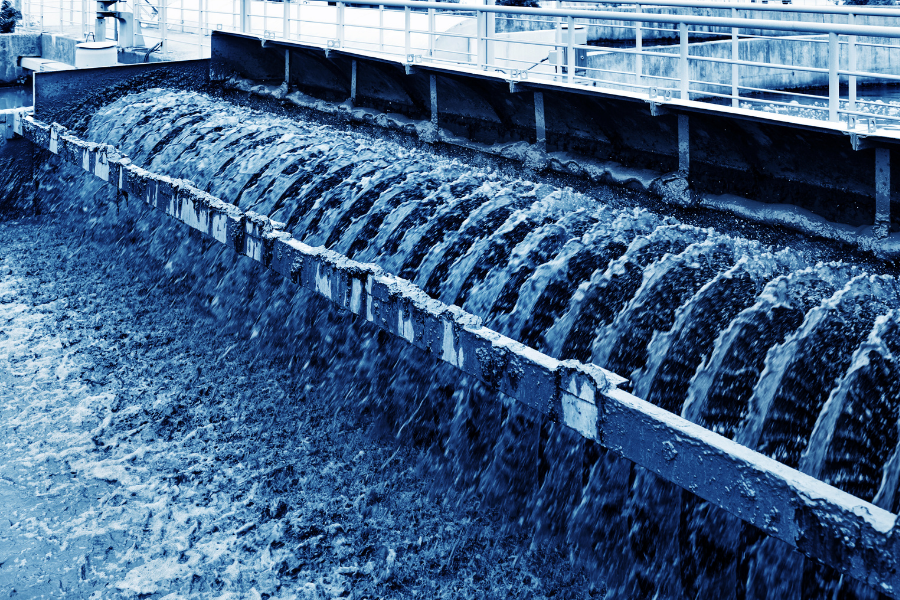
Increase efficiencies and lower costs with industrial water filters
Any process application requires industrial water filters or filtration systems to separate solids from liquids. Water filtration is thus an integral part of many industries’ production processes, whether automotive, food & beverage, pharmaceutical, oil & gas or chemical (to name a few).
Most manufacturers are in fact heavy users of water – for cleaning, sanitation, cooling, process usage and to generate steam. These also require huge amounts of energy.
Choosing the best filtration system for your company can help reduce your footprint by reducing emissions and waste, while protecting the planet and your staff from contaminants and hazardous materials. This can increase productivity and improve your company’s bottom line.
How do industrial water filters work?
The filtration process begins when fluid is poured into a system, allowing the liquid to pass through a membrane that collects the particulates. This removes impurities, leaving only the filtered substance.
Industrial water filters and filtration systems are often innovative and environmentally friendly solutions that can make manufacturing more effective, which reduces cost. Some typical benefits include:
Lower cost of maintenance-
Industrial water filters keep harmful contaminants out of downstream piping and equipment, allowing the system to function effectively. The impact of scaling and fouling in piping can increase the pumping requirements of a system by up to almost 20%, which results in higher energy consumption and could even affect the quality of the end product. Filtration systems allow equipment to function at peak performance. This allows increased production and ensures less downtime, because only scheduled maintenance will be required.
Reduced spend on energy-
New industrial water filters provide innovative and eco-friendly ways to save money on energy. For example, chemical plants can use and reuse wastewater, reducing electricity and water costs. Instead of using water once, with cutting-edge industrial water filter systems, a plant can use the same water several times – reducing spend and emissions.
Water reuse-
Recycling and reusing water from waste streams diminishes potential water shortage risks and creates greater water security. This is critical in areas that suffer from drought and water shortages. Water filtration and reuse is also a way for companies to be socially responsible and stay competitive. From lowering costs of purchasing and treating fresh water to reducing energy, treatment, and heating process costs, the economic benefits are clear.
Many Canadian mines and waste water facilities have adopted a Zero Liquid Discharge policy, which means that all wastewater is purified and recycled – not even a drop of water can leave the plant as waste at the end of a treatment cycle.
ZLD also allows plants to sell or reuse some of the solids that are removed from wastewater. According to ISC, lithium can be recovered in oil brine fields and gypsum can be recovered from mine water.
In conclusion
A burgeoning population, combined with the pressures of urbanization, industrialization, and climate change, is putting increasing demands on fresh water, which is already a scarce commodity. Manufactures must adopt industrial water filters and systems that reuse water as much as possible, while taking responsibility for their own wastewater. Whether a new investment or an upgrade, an industrial water filtration system can generate a significant return.
To learn more about the cutting-edge industrial water filters that are available for your manufacturing and processing needs, contact our team of experts on 1-800-367-4180 (toll-free) for more information. We are your industrial water filter supplier in Canada and we’re here to help you choose, install, maintain, and monitor a variety of equipment. And to answer questions about things you’ve previously tried gone wrong.