
How the design of horizontal split-case pumps makes the difference
Split case pumps are one of many types of centrifugal pumps. Split case pumps can be horizontal or vertical, depending on how the casing is split into the two chambers relative to the impeller. The suction and discharge nozzles are on either side of the bottom half of the casing, while the impeller is located on a shaft between two bearings, that offer support for it on either side.
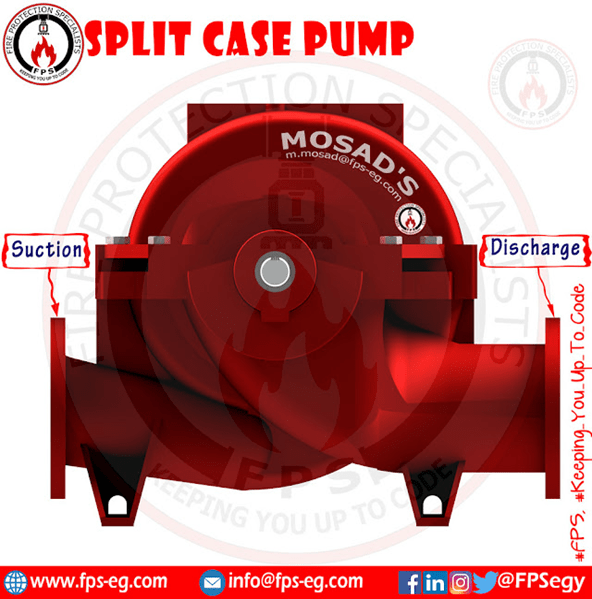
While the first centrifugal pumps were developed in the 1900s, split case pumps evolved as massive quantities of fluid had to get from one place to another. If you have significant quantities of fluid to move (especially water), horizontal split case pumps are your best bet.
Used in all types of industries including marine, wastewater, aerospace, mining, pharmaceutical, and more, HSC pumps can be useful for heavy duty applications such as power supply and firefighting systems due to their low-maintenance costs and reliability.
It’s all in the design
Split case pumps are the industrial workhorses of the pump family. While not as flexible as some centrifugal pump designs, they are known for dependability and durability because they’ll just keep going – for decades even – without failure. The reason that they are renowned for their durability, efficiency, and reliability comes down to their design.
Here’s two unique design features of HSC pumps.
1. Between the bearings design
Horizontal split case pumps are known for their between-the-bearing design, which allows for the impeller to be mounted on a shaft that is literally between two bearings, which offer additional support. This also allows the impeller to turn efficiently under high-stress conditions.
2. Double-suction impeller
Split case pumps make use of a double-suction impeller. This design allows it to draw in water from both sides of the impeller which dramatically reduces loads on the bearings – unlike single-suction that draw water from only one side. This means bearings last longer, enabling more efficient and cost-effective operations.
Due to these design features, HSC pumps are a more balanced piece of equipment than most other types of pumps. If you choose robust bearings and maintenance friendly casings, HSC pumps are the best option for municipalities and industrial plants.
With a rugged design and lower thrust loads, HSC pumps can also be used for high-flow-rate applications that are not suited to end suction pumps, like portable water, cooling water, and industrial process flows characterized by thin fluids.
Many industries extend their pressure capabilities by choosing multi-stage HSC pumps – allowing a head of up to 2.200 ft at the maximum at 2,000 gpm and an operating pressure of 740 psi.
To find out more about the advantages and disadvantages of HSC pumps, read Why choosing a horizontal split-case pump shouldn’t ever be a split decision.
If you have any questions about whether to use horizontal split-case pumps, give us a call on 1-800-367-4180 (toll-free). Our experts are on hand to help you choose, install, maintain, and monitor a variety of equipment. And to answer questions about things you’ve previously tried gone wrong.